New Algorithm Breaks Sorting Barrier in Shortest-Path Computation
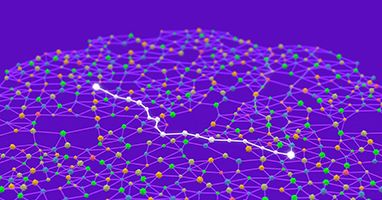
Background on the Shortest‑Path Problem
The shortest‑path problem, a cornerstone of computer science, asks for the minimum‑weight routes from a source node to all other nodes in a network. Since its formalization, the field has relied heavily on Dijkstra's algorithm, introduced in 1956, and its later refinements, which sort nodes by distance and thus encounter a fundamental speed constraint known as the sorting barrier.
Limitations of Existing Approaches
Traditional algorithms such as Dijkstra's and its optimized versions require sorting operations that set a lower bound on execution time. Earlier attempts to bypass this limit succeeded only under special weight assumptions or on undirected graphs, leaving directed graphs—common in real‑world applications—still bound by the barrier.
Breakthrough Development
Ran Duan, along with graduate students and later researcher Xiao Mao, devised a new algorithm that sidesteps sorting entirely. The approach clusters frontier nodes, examines only representative nodes from each cluster, and intermittently runs a truncated Bellman‑Ford process to identify influential vertices. This hybrid strategy allows the algorithm to progress outward in layers without guaranteeing that each layer’s nodes are processed in strict distance order, thereby nullifying the sorting constraint.
Key Innovations
- Frontier clustering reduces the number of candidate nodes examined at each step.
- Selective Bellman‑Ford iterations scout ahead for high‑impact nodes without incurring the full algorithm’s usual overhead.
- A deterministic, non‑randomized refinement replaces earlier probabilistic components, enhancing reliability.
Performance and Implications
The resulting method runs slightly faster than the best known versions of Dijkstra's algorithm on both directed and undirected graphs. While the improvement is modest, it demonstrates that the sorting barrier is not an absolute limit. Experts such as Mikkel Thorup and Robert Tarjan praised the work as a significant advance, suggesting further refinements could yield even greater speed gains.
Future Directions
Duan’s team plans to streamline the algorithm and explore its limits. The discovery opens new avenues for graph‑processing research, indicating that longstanding algorithmic boundaries may still be overcome.
Usado: News Factory APP - descubrimiento de noticias y automatización - ChatGPT para Empresas