Google Pixel 10 Review: A Balanced Flagship with Trade‑offs
Design, Display, and Build
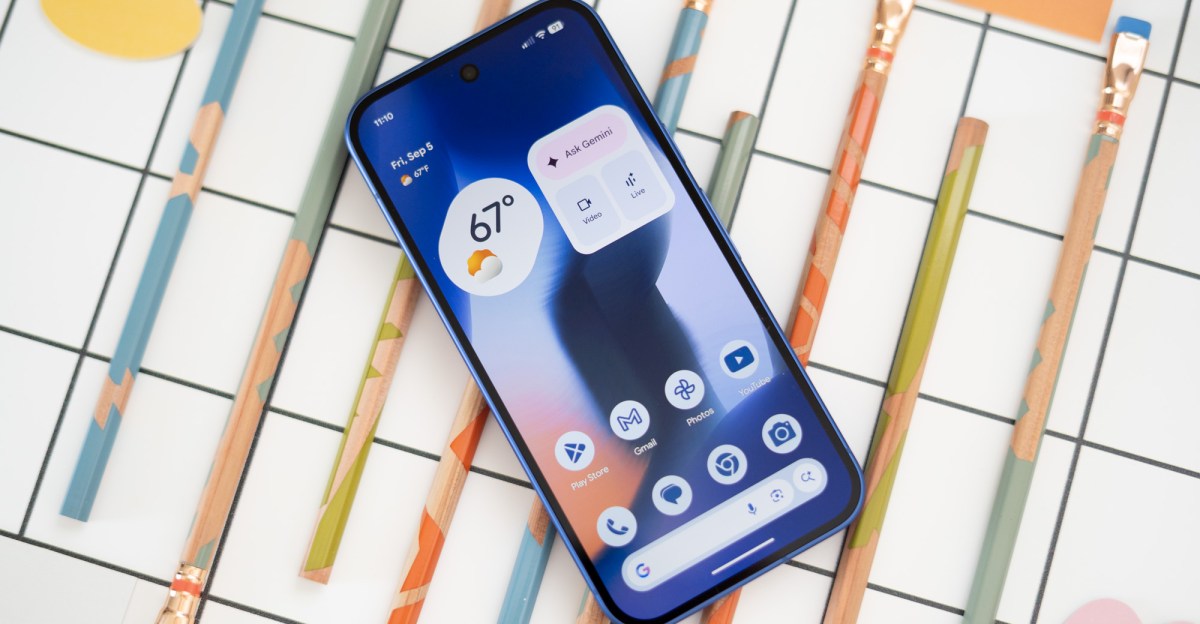
The Pixel 10 maintains a familiar design language while introducing new elements such as Qi2 magnetic wireless charging, which works without a case. The device is IP68 dust‑ and water‑resistant and houses a 6.3‑inch 1080p OLED panel capable of 120 Hz refresh rates, though the display can drop to 60 Hz in certain scenarios. Brightness peaks around 3,000 nits, keeping the screen usable in sunlight. Users have reported occasional vignetting under bright light, which can be corrected by selecting the “natural” color profile.
Performance and Power
At the heart of the phone is Google’s custom Tensor G5 processor, the first made by TSMC for Google, paired with 12 GB of RAM and storage options of 128 GB or 256 GB. The chip runs slightly cooler than earlier versions and handles heavy AI workloads efficiently. Battery capacity is 4,970 mAh, delivering a full day of moderate use. However, intensive activities such as extended gaming or hotspot usage may require a charger before the day ends. The device supports 30 W wired charging, achieving a 55 percent charge in 30 minutes, and Qi2 wireless charging up to 15 W.
Camera System
The Pixel 10 introduces a dedicated 10.8‑megapixel 5× telephoto lens for the first time in the non‑Pro line. To accommodate this addition, the main 48‑megapixel sensor and the 13‑megapixel ultrawide sensor have been scaled down, resembling the hardware in the mid‑range Pixel 9A. The result is a “perfectly fine” camera experience for most users, though it falls short of the higher‑end sensors found in the Pixel 10 Pro. Portrait mode performance suffers in low‑light or fast‑moving scenarios due to the smaller sensor size, while the ultrawide lens handles dim indoor lighting acceptably. The telephoto lens offers true optical zoom, eliminating the need for digital zoom.
AI Features and Software
Google has loaded the Pixel 10 with on‑device AI, leveraging the Tensor G5’s capabilities. The Magic Cue feature can fetch relevant information based on user activity, such as suggesting calendar events while messaging or offering destination ideas in Maps. While occasional false positives occur, the overall utility is considered positive. The phone’s AI does not include the generative AI‑assisted camera zoom found in the Pro models.
Battery Life and Charging
Battery endurance is adequate for everyday tasks, but power‑intensive use may require a charger by late afternoon. The Qi2 magnetic wireless charging experience is highlighted as seamless, with the device snapping onto a PixelSnap charger without a case. The integration with other Google devices, such as the Pixel Watch, adds convenience, though it is not a novel feature.
Overall Assessment
Google positions the Pixel 10 as a cost‑effective flagship, keeping the price at $799—unchanged from the previous generation—while adding magnetic wireless charging and a telephoto lens. The trade‑off is a reduction in the main and ultrawide camera hardware, which may disappoint users expecting Pro‑level imaging. Performance, AI integration, and build quality remain strong, making the Pixel 10 a solid choice for consumers seeking a premium Android experience without the higher price tag of the Pro model.
Usado: News Factory APP - descoberta e automação de notícias - ChatGPT para Empresas