Neo Home Robot Promises Household Help but Relies on Remote Operation
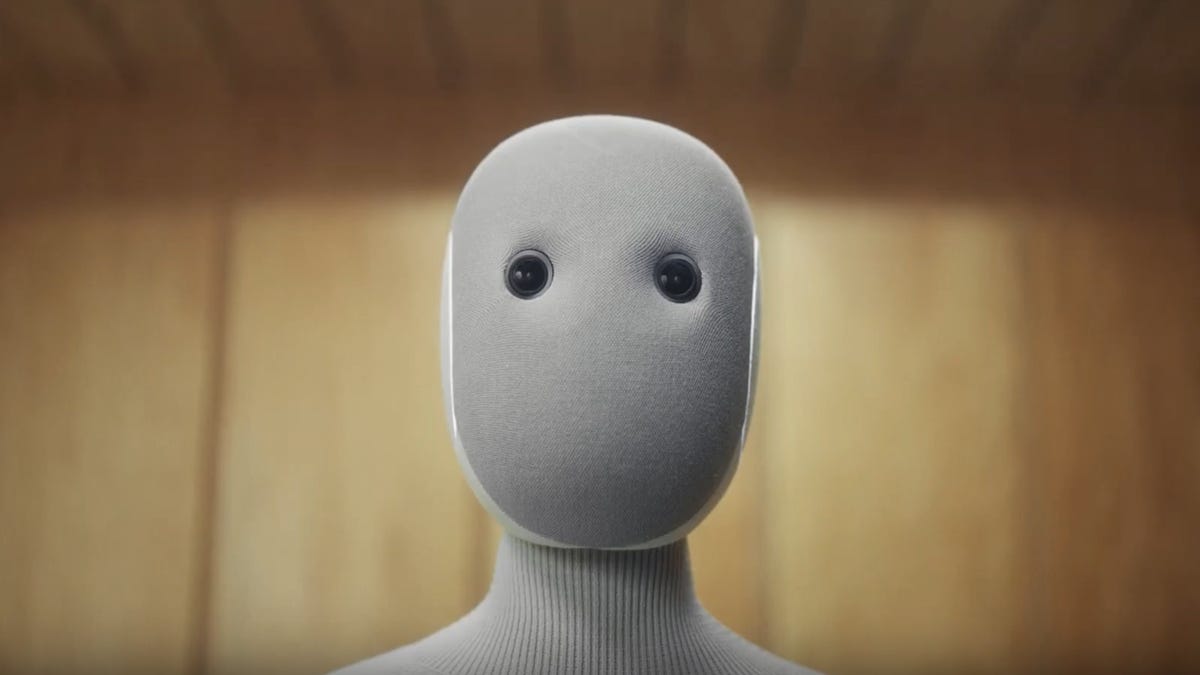
Introducing Neo
1X, a California company, is marketing Neo as a consumer‑ready humanoid robot for the home. Standing about five feet tall and weighing roughly the same as a large dog, Neo is designed to perform a range of household tasks, from folding laundry and running a vacuum to opening doors and climbing stairs. The robot is covered in soft, neutral‑colored materials and moves with a gentle, human‑like gait thanks to a tendon‑driven motor system.
Capabilities and Specs
Neo’s specifications include a lifting capacity of up to 154 pounds, a carrying capacity of 55 pounds, and a runtime of roughly four hours per charge. Its hands are IP68‑rated, meaning they can be submerged in water. Connectivity options cover Wi‑Fi, Bluetooth and 5G, and the robot’s built‑in large language model (LLM) mirrors the technology behind ChatGPT and Gemini, enabling conversational interaction.
Current Operation Model
Although marketed as an autonomous assistant, Neo is largely teleoperated at present. A human operator uses a virtual‑reality headset and controllers to guide the robot, a detail highlighted by a Wall Street Journal preview. 1X’s CEO, Bernt Børnich, indicated that the robot will achieve more autonomous functions by 2026, though the initial quality may be limited.
Learning, Support and Pricing
Early adopters are expected to help Neo learn by allowing it to observe their environment. If Neo encounters a task it cannot complete, owners can schedule an expert from 1X to assist and teach the robot. The robot is offered for a purchase price of $20,000, with an optional $499 monthly subscription planned for a later release.
Privacy Measures
Neo is designed to listen only when it detects it is being addressed, and its cameras can blur human faces. Users can restrict the robot from entering specific areas, and the company states that teleoperation will never occur without owner approval. These privacy features aim to address concerns about an AI‑equipped device monitoring home life.
Future Outlook
The first units are slated to ship in the United States in 2026, with a broader international rollout expected in 2027. While Neo represents a significant step toward household humanoid robots, its reliance on remote operation and the need for user‑guided learning suggest a gradual path toward the fully autonomous future the company envisions.
Usado: News Factory APP - descoberta e automação de notícias - ChatGPT para Empresas