Robot Lawn Mowers: GPS, RTK and Design Drive Modern Performance
Evolution from Boundary Wires to GPS‑RTK
Early robot lawn mowers depended on a continuous boundary wire to define their operating area. Any break in the wire caused the mower to lose its limits. Today, most models use GPS navigation, but GPS alone is only accurate to a few feet—insufficient for precise property lines. To bridge this gap, manufacturers add a Real‑Time Kinematic (RTK) beacon that works with GPS satellites, providing a fixed Earth location. As Husqvarna’s robotics head described, the RTK beacon tells satellites "I'm always here," enabling the mower to adjust its position to within centimeters.
Practical GPS Coverage Considerations
GPS‑RTK works best where users can place a base station or beacon within their yard. Suburban homes often have suitable spots, while dense urban environments may present challenges. Additionally, many mowers require Wi‑Fi connectivity to operate fully, as seen with models that use an Ethernet cable to link to a router.
Design Factors That Influence Mowing Ability
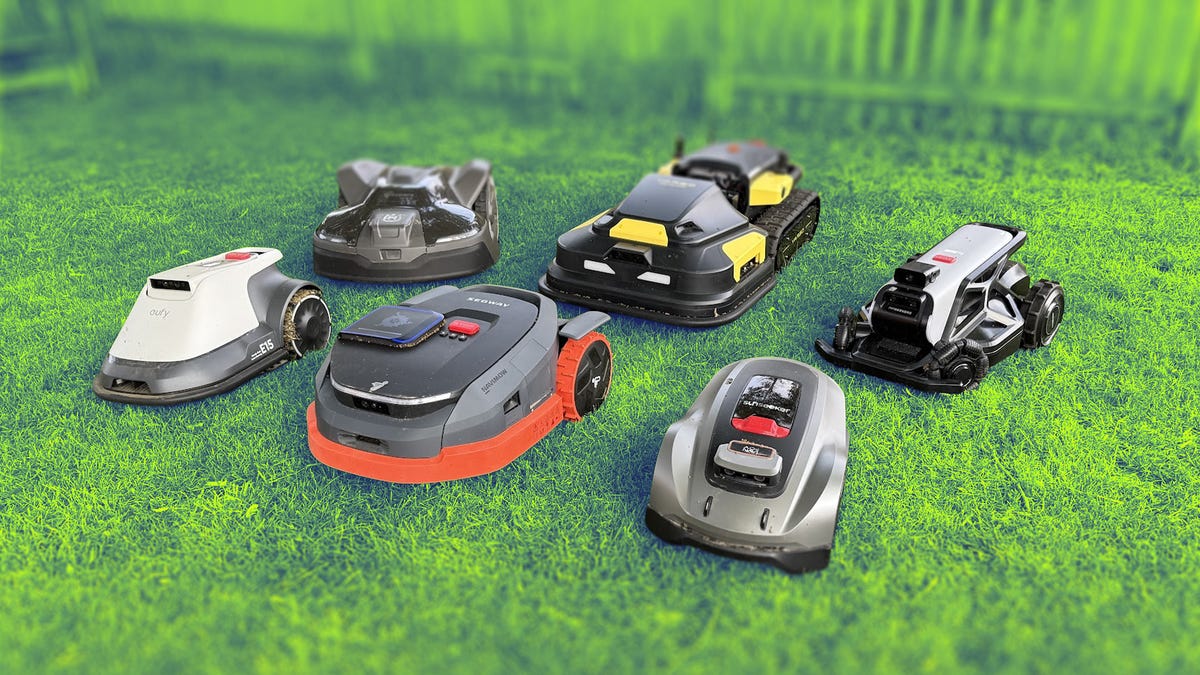
Cutting width varies among models, affecting their ability to navigate narrow paths. For example, the Segway mower has a chassis width of 20.5 inches and a cutting width of 9 inches, while the Sunseeker’s overall width is 14 inches with an 8‑inch cutting width. These dimensions can limit performance in tight spaces, even if the mower physically fits.
Camera systems are another critical component. Some brands, such as Eufy, rely heavily on cameras and cannot mow at night because obstacle detection degrades without light. Other models allow users to disable nighttime mowing to avoid this issue.
Scheduling and Weather Awareness
All tested mowers include scheduling capabilities, letting owners set specific mowing times. Advanced scheduling can also account for weather, postponing runs when rain is detected to protect the equipment and ensure optimal grass cutting.
Human Oversight and Real‑World Testing
Despite sophisticated sensors, robot mowers still require occasional human supervision. In field tests, devices occasionally missed patches of grass or struggled with obstacles such as a trampoline, exposed tree roots, and curious pets. The tester’s yard featured a mix of obstacles, grades, and narrow pathways, providing a comprehensive environment to evaluate performance.
Testing spanned a range of temperatures—from 40 °F to over 90 °F—and included several rainstorms, including a torrential downpour that did not damage any of the units. Over six weeks, each mower was run, then allowed a recovery period for grass regrowth before the next model was evaluated.
Overall Assessment
The integration of GPS‑RTK, thoughtful design, and smart scheduling has made modern robot lawn mowers reliable for most residential lawns. While they excel in many conditions, owners should be aware of limitations in tight spaces, nighttime operation for camera‑dependent models, and the need for occasional human intervention to address missed spots or unusual obstacles.
Usado: News Factory APP - descoberta e automação de notícias - ChatGPT para Empresas