Google Launches WeatherNext 2, an AI‑Powered Forecasting Model
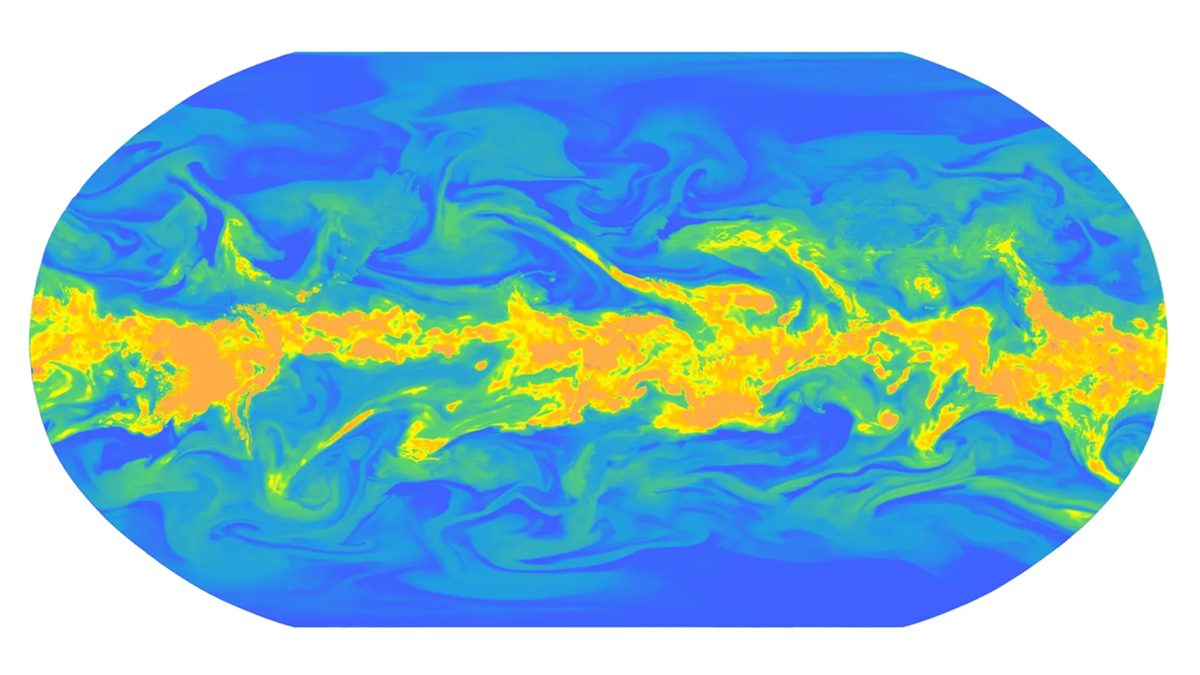
Google’s New AI Forecasting Engine
Google announced WeatherNext 2, its latest AI‑powered weather forecasting model. The system is designed to generate faster, more accurate, and higher‑resolution forecasts by simulating hundreds of possible weather outcomes from a single starting point in less than a minute. According to Google, WeatherNext 2 operates up to eight times faster than traditional physics‑based models that can take hours on supercomputers.
The model leverages a Functional Generative Network (FGN), which differs from conventional models by focusing on individual weather variables—temperature, wind speed, humidity, and the like—rather than entire weather systems. By learning how these variables interact to form complex patterns such as storm fronts or heat waves, WeatherNext 2 can produce a range of physically realistic scenarios rather than a single most‑likely outcome.
Integration Across Google Services
WeatherNext 2 is being rolled out on multiple Google platforms. Early integrations include Google Search, the Gemini AI assistant, Pixel Weather, and Google Maps. Google also indicated plans to expand access through a broader Google Maps Platform Weather API, allowing developers to incorporate the advanced forecasts into their applications.
Performance and Accuracy Claims
Google asserts that WeatherNext 2 delivers improved accuracy for 99.9% of weather variables and provides reliable forecasts for up to 15 days ahead. The rapid generation of forecasts—completed in under a minute—enables more frequent updates and finer‑grained detail, which can be especially valuable for users making day‑to‑day decisions.
Impact on Users and Industries
The new model’s ability to present a spread of possible outcomes aims to give everyday users a clearer picture of weather uncertainty. Rather than a simple “rain, 40% chance,” forecasts can now illustrate multiple coherent scenarios, helping people plan activities with greater confidence. Beyond consumer use, Google highlights potential benefits for renewable‑energy providers, who can better estimate wind and solar output, and for emergency services that need precise forecasts to respond effectively.
Emphasis on Uncertainty
Google frames WeatherNext 2 as a step toward forecasting that acknowledges uncertainty rather than masking it. By offering a range of realistic scenarios, the system encourages strategic preparation for what might happen, aligning with broader goals of improving decision‑making infrastructure through better data.
Used: News Factory APP - news discovery and automation - ChatGPT for Business