What is new on Article Factory and latest in generative AI world

ChatGPT Launches Dedicated Translation Webpage

ChatGPT Launches Dedicated Translation Webpage
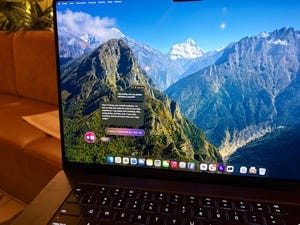
OpenAI has introduced a new translation interface at chatgpt.com/translate, offering users a simple text‑to‑text translation tool that mirrors familiar services like Google Translate. The page supports translation in 50 languages and links directly to ChatGPT's main chat interface, where users can refine translations, adjust tone, or request explanations suitable for children. Sample prompts appear as one‑click buttons, and the system also hints at future capabilities such as voice and image inputs. The rollout arrives as Google expands its own AI‑driven translation features, highlighting a competitive push in the language‑technology market. Read more →

AI Shifts From Chatbots to World Models: Building Physical Intelligence

AI Shifts From Chatbots to World Models: Building Physical Intelligence
While large language models like ChatGPT and Gemini dominate today’s AI products, industry leaders are turning toward world models that encode the physical world’s laws, objects and movement. These models aim to power realistic video, surgical robots and self‑driving cars, forging a new era of "physical AI." Prominent figures such as Yann LeCun, Fei‑Fei Li and Nvidia’s Jensen Huang are championing spatial intelligence and synthetic data as the foundation for this shift. Read more →

Nvidia Unveils Alpamayo: Open‑Source AI Models for Autonomous Vehicles

Nvidia Unveils Alpamayo: Open‑Source AI Models for Autonomous Vehicles
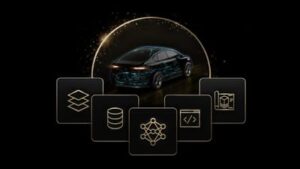
At CES 2026, Nvidia announced Alpamayo, a new family of open‑source AI models, simulation tools, and datasets designed to give autonomous vehicles human‑like reasoning capabilities. Central to the suite is Alpamayo 1, a 10 billion‑parameter vision‑language‑action model that breaks down driving problems into steps, evaluates possibilities, and selects the safest actions. The code is released on Hugging Face, and developers can fine‑tune it, create auto‑labeling systems, or combine real and synthetic data generated by Nvidia’s Cosmos world models. An open dataset of more than 1,700 hours of driving footage and the AlpaSim simulation framework are also available to accelerate safe, large‑scale testing. Read more →