What is new on Article Factory and latest in generative AI world

Why Certain Tasks Should Stay Away From ChatGPT

Why Certain Tasks Should Stay Away From ChatGPT
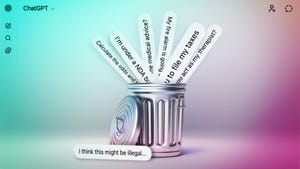
ChatGPT is a versatile tool, but it falls short in critical areas such as health diagnosis, mental‑health support, emergency decisions, personalized finance, handling sensitive data, illegal activities, academic cheating, real‑time monitoring, gambling advice, legal drafting, and artistic creation. Relying on the AI for these purposes can lead to inaccurate information, security risks, and serious real‑world consequences. Leia mais →

How Educators Are Spotting AI‑Written Student Work

How Educators Are Spotting AI‑Written Student Work
Teachers are encountering a surge of assignments that appear to be generated by artificial‑intelligence tools such as ChatGPT. The writing often sounds polished but lacks a personal voice, repeats key terms from prompts, and includes generic or inaccurate details. In response, instructors are adopting practical tactics—ranging from reviewing students' own writing samples to using AI‑detection tools—to identify and address AI‑assisted cheating while preserving academic standards. Leia mais →

Eleven Situations Where ChatGPT Should Not Be Fully Trusted

Eleven Situations Where ChatGPT Should Not Be Fully Trusted
ChatGPT offers convenience for many everyday tasks, but it falls short in critical areas such as health diagnoses, mental‑health support, emergency safety decisions, personalized finance or tax advice, handling confidential data, illegal activities, academic cheating, real‑time news monitoring, gambling, legal document drafting, and artistic creation. While it can provide general information and brainstorming assistance, relying on it for these high‑stakes matters can lead to serious consequences. Users are urged to treat the AI as a supplemental tool and seek professional expertise where accuracy, legality, or personal safety is at stake. Leia mais →

What Not to Ask ChatGPT: 11 Risky Uses to Avoid

What Not to Ask ChatGPT: 11 Risky Uses to Avoid
ChatGPT is a powerful tool, but it isn’t suitable for every task. Experts warn against relying on the AI for diagnosing health conditions, mental‑health support, emergency safety decisions, personalized financial or tax advice, handling confidential data, illegal activities, academic cheating, real‑time news monitoring, gambling, drafting legal contracts, or creating art to pass off as original. While it can help with general information and brainstorming, users should treat it as a supplement, not a replacement for professional expertise or critical real‑time resources. Leia mais →

AI Tools Fuel Student Cheating, Prompting Calls for Corporate Accountability

AI Tools Fuel Student Cheating, Prompting Calls for Corporate Accountability
Educators are warning that AI agents from companies such as OpenAI, Perplexity, Google, and Instructure are being used to complete assignments, quizzes, and essays for students. While firms point to the educational potential of their products, they also acknowledge the difficulty of blocking locally‑run tools. Schools report that AI agents can submit work quickly and evade detection, leading to concerns over academic integrity. Stakeholders are urging a collaborative approach to define responsible AI use in classrooms, but practical solutions remain limited. Leia mais →

How to Detect AI Writing Using These Tips

How to Detect AI Writing Using These Tips
Artificial intelligence tools such as ChatGPT have made it easy to generate essays, emails and other written content in seconds. Educators are increasingly confronting AI‑generated work and need reliable ways to spot it. Common red flags include repeated key terms from the assignment prompt, factual inaccuracies, stilted or unnatural sentences, generic explanations and a tone that does not match a student's usual style. Detection utilities like GPTZero and Smodin can scan texts for AI signatures. Teachers can also collect a baseline writing sample from each student, compare suspect submissions, and ask AI to rewrite the work to see if it merely swaps synonyms. These strategies help maintain academic integrity without assuming guilt. Leia mais →

Professors Warn of AI-Generated Student Essays and Offer Detection Strategies

Professors Warn of AI-Generated Student Essays and Offer Detection Strategies
Educators are observing a surge in students using AI tools such as ChatGPT, Grammarly, and EssayGenius to draft assignments, bypassing the learning process. Professors note clear signs of AI‑generated text, including repeated prompt phrases, ambiguous language, unrealistic facts, and a tone that differs from a student's usual style. To combat the trend, teachers are turning to specialized detection tools like GPTZero and Smodin, collecting baseline writing samples, and even testing assignments themselves with AI to understand its output. These proactive measures aim to preserve academic integrity while acknowledging AI's growing role in education. Leia mais →

11 Situations Where Using ChatGPT Can Backfire

11 Situations Where Using ChatGPT Can Backfire
ChatGPT excels at drafting questions, translating jargon, and offering basic explanations, but it falls short when asked to diagnose health conditions, provide mental‑health support, make emergency safety decisions, handle personalized finance or tax planning, process confidential data, or create legally binding documents. The model also cannot be trusted for cheating‑related tasks, real‑time news monitoring, gambling advice, or original artistic creation. Users are urged to treat the AI as a supplemental tool rather than a replacement for professionals in these high‑risk areas. Leia mais →

How Educators Spot AI‑Written Student Work

How Educators Spot AI‑Written Student Work
The surge of AI writing tools has created new challenges for teachers who must protect academic integrity. Instructors can recognize AI‑generated essays by looking for repeated prompt language, inaccurate facts, unnatural sentence flow, generic explanations, and a tone that does not match a student's usual voice. Proactive strategies include testing AI tools on assignment prompts, collecting personal writing samples from students, requesting rewrites, and using dedicated detection software. These methods help educators identify and address AI misuse while maintaining a fair learning environment. Leia mais →

How ChatGPT Is Shaping Modern Study Habits

How ChatGPT Is Shaping Modern Study Habits
ChatGPT is emerging as a versatile study companion for students. It can generate endless practice quizzes, translate dense academic language into plain terms, spark fresh ideas for essays, and act as a conversational partner for language practice. By providing instant feedback and customizable content, the AI tool helps learners reinforce concepts, clarify misunderstandings, and stay engaged without replacing traditional study methods. While educators caution against misuse, many students find value in using ChatGPT as a supportive resource that complements classroom instruction. Leia mais →

How Educators Spot AI‑Written Student Work

How Educators Spot AI‑Written Student Work
The surge of AI writing tools has created new challenges for teachers who must protect academic integrity. Instructors can recognize AI‑generated essays by looking for repeated prompt language, inaccurate facts, unnatural sentence flow, generic explanations, and a tone that does not match a student's usual voice. Proactive strategies include testing AI tools on assignment prompts, collecting personal writing samples from students, requesting rewrites, and using dedicated detection software. These methods help educators identify and address AI misuse while maintaining a fair learning environment. Leia mais →

How Educators Spot AI‑Written Student Work

How Educators Spot AI‑Written Student Work
The surge of AI writing tools has created new challenges for teachers who must protect academic integrity. Instructors can recognize AI‑generated essays by looking for repeated prompt language, inaccurate facts, unnatural sentence flow, generic explanations, and a tone that does not match a student's usual voice. Proactive strategies include testing AI tools on assignment prompts, collecting personal writing samples from students, requesting rewrites, and using dedicated detection software. These methods help educators identify and address AI misuse while maintaining a fair learning environment. Leia mais →

How ChatGPT Is Shaping Modern Study Habits

How ChatGPT Is Shaping Modern Study Habits
ChatGPT is emerging as a versatile study companion for students. It can generate endless practice quizzes, translate dense academic language into plain terms, spark fresh ideas for essays, and act as a conversational partner for language practice. By providing instant feedback and customizable content, the AI tool helps learners reinforce concepts, clarify misunderstandings, and stay engaged without replacing traditional study methods. While educators caution against misuse, many students find value in using ChatGPT as a supportive resource that complements classroom instruction. Leia mais →

How ChatGPT Is Shaping Modern Study Habits

How ChatGPT Is Shaping Modern Study Habits
ChatGPT is emerging as a versatile study companion for students. It can generate endless practice quizzes, translate dense academic language into plain terms, spark fresh ideas for essays, and act as a conversational partner for language practice. By providing instant feedback and customizable content, the AI tool helps learners reinforce concepts, clarify misunderstandings, and stay engaged without replacing traditional study methods. While educators caution against misuse, many students find value in using ChatGPT as a supportive resource that complements classroom instruction. Leia mais →

How Educators Spot AI‑Written Student Work

How Educators Spot AI‑Written Student Work
The surge of AI writing tools has created new challenges for teachers who must protect academic integrity. Instructors can recognize AI‑generated essays by looking for repeated prompt language, inaccurate facts, unnatural sentence flow, generic explanations, and a tone that does not match a student's usual voice. Proactive strategies include testing AI tools on assignment prompts, collecting personal writing samples from students, requesting rewrites, and using dedicated detection software. These methods help educators identify and address AI misuse while maintaining a fair learning environment. Leia mais →

How ChatGPT Is Shaping Modern Study Habits

How ChatGPT Is Shaping Modern Study Habits
ChatGPT is emerging as a versatile study companion for students. It can generate endless practice quizzes, translate dense academic language into plain terms, spark fresh ideas for essays, and act as a conversational partner for language practice. By providing instant feedback and customizable content, the AI tool helps learners reinforce concepts, clarify misunderstandings, and stay engaged without replacing traditional study methods. While educators caution against misuse, many students find value in using ChatGPT as a supportive resource that complements classroom instruction. Leia mais →

How ChatGPT Is Shaping Modern Study Habits

How ChatGPT Is Shaping Modern Study Habits
ChatGPT is emerging as a versatile study companion for students. It can generate endless practice quizzes, translate dense academic language into plain terms, spark fresh ideas for essays, and act as a conversational partner for language practice. By providing instant feedback and customizable content, the AI tool helps learners reinforce concepts, clarify misunderstandings, and stay engaged without replacing traditional study methods. While educators caution against misuse, many students find value in using ChatGPT as a supportive resource that complements classroom instruction. Leia mais →

How Educators Spot AI‑Written Student Work

How Educators Spot AI‑Written Student Work
The surge of AI writing tools has created new challenges for teachers who must protect academic integrity. Instructors can recognize AI‑generated essays by looking for repeated prompt language, inaccurate facts, unnatural sentence flow, generic explanations, and a tone that does not match a student's usual voice. Proactive strategies include testing AI tools on assignment prompts, collecting personal writing samples from students, requesting rewrites, and using dedicated detection software. These methods help educators identify and address AI misuse while maintaining a fair learning environment. Leia mais →

When Not to Rely on ChatGPT: Risks and Limits

When Not to Rely on ChatGPT: Risks and Limits
ChatGPT can help with many everyday tasks, but it falls short in critical areas. The AI should not be used for diagnosing health issues, providing mental‑health support, making emergency safety decisions, offering personalized financial or tax advice, handling confidential or regulated data, facilitating illegal activity, completing academic work, delivering real‑time updates, gambling, drafting legally binding documents, or creating art that is passed off as original. Users are urged to treat the chatbot as a supplemental tool and seek professional help when stakes are high. Leia mais →