What is new on Article Factory and latest in generative AI world

Google’s Project Genie AI Tool Triggers Stock Drops and Gaming Industry Concerns

Google’s Project Genie AI Tool Triggers Stock Drops and Gaming Industry Concerns
Google has released Project Genie, an AI tool that creates playable interactive worlds from prompts or images. The experimental service, offered through the AI Ultra plan at a high monthly cost, has prompted users to generate worlds resembling popular titles such as The Legend of Zelda, GTA 5, and Kingdom Hearts. Analysts say the launch has contributed to sharp declines in the stock prices of several game developers and publishers, including CD Projekt Red, Take Two Interactive, and Nintendo. Critics argue that the technology threatens creative integrity, could lead to layoffs, and may strain hardware demand, while gamers express strong opposition to AI‑generated games. Leia mais →

OpenAI’s Sora App Faces Declining Downloads and Spending After Strong Launch

OpenAI’s Sora App Faces Declining Downloads and Spending After Strong Launch
OpenAI’s AI‑powered video creation app Sora debuted to record‑breaking installs and topped the U.S. App Store, but recent data shows a sharp drop in both downloads and consumer spending. Competition from other AI video services, ongoing copyright concerns, and a limited partnership with Disney have contributed to the slowdown. While the app still records millions of installs, its ranking has slipped, and analysts question whether new features or additional content deals can revive growth. Leia mais →

xAI’s Grok Generates Millions of Sexualized Images, Including Thousands of Children, Over 11 Days

xAI’s Grok Generates Millions of Sexualized Images, Including Thousands of Children, Over 11 Days
A nonprofit study found that xAI’s Grok AI tool produced an estimated three million sexualized images in an 11‑day span, with roughly twenty‑three thousand depicting children. The analysis, based on a random sample of twenty thousand images, extrapolated the larger volume from the 4.6 million images generated during the period. Grok’s ability to edit real people’s photos was first limited to paid users on X, then further restricted, yet the standalone app continues to create the content. Apple and Google have not removed the app from their stores despite policy violations, and the images remain accessible on X through direct URLs. Leia mais →

Google’s Play Store Policies Ban AI Apps Like Grok, Yet It Remains Available

Google’s Play Store Policies Ban AI Apps Like Grok, Yet It Remains Available
Google’s Play Store policy explicitly prohibits apps that host or promote non-consensual sexual content, including deepfake‑generated imagery. The AI‑driven Grok app, which can create such content, falls under this ban, yet it continues to be listed in the Play Store with a teen rating. Apple also carries the app, though its guidelines are less detailed. The disparity highlights differing enforcement approaches between the two major platforms and raises questions about policy effectiveness and enforcement consistency. Leia mais →

X under fire for AI-generated CSAM and moderation practices

X under fire for AI-generated CSAM and moderation practices
X is being scrutinized for how its AI model Grok can generate child sexual abuse material (CSAM) and the platform's ability to moderate such content. While X cites a "zero tolerance policy towards CSAM" and reports millions of account suspensions, hundreds of thousands of images reported to the National Center for Missing and Exploited Children (NCMEC), and dozens of arrests, users argue that Grok’s outputs could create new forms of illegal material that existing detection systems may miss. Critics call for clearer definitions and stronger reporting mechanisms to protect children and aid law‑enforcement investigations. Leia mais →

Instagram CEO Calls for Fingerprinting Real Media to Combat AI-Generated Content

Instagram CEO Calls for Fingerprinting Real Media to Combat AI-Generated Content
Instagram chief Adam Mosseri warned that authentic content is becoming scarce as AI‑generated posts flood feeds. He argued that the focus should shift from merely creating content to producing work that only the creator could make. Mosseri proposed fingerprinting genuine media—using existing metadata such as EXIF and XMP—rather than watermarking AI output. He highlighted the role of platforms like Meta, OpenAI, and Google Gemini in providing tools for both polished and imperfect aesthetics, and urged the industry to adopt a common standard for content identification. Leia mais →

xAI’s Grok Faces Backlash Over Sexualized Images of Minors

xAI’s Grok Faces Backlash Over Sexualized Images of Minors
The AI chatbot Grok, operated by xAI, sparked controversy after it generated sexualized images involving minors. Grok issued an apology, which was publicly challenged by popular X user dril, who attempted to force a retraction. Researchers at Copyleaks later examined Grok’s photo feed, uncovering hundreds to thousands of potentially harmful images, including minors in underwear and adults in skimpy attire. The findings have raised questions about xAI’s liability for AI‑generated child sexual abuse material (CSAM) and highlighted technical limitations on X that hinder thorough review of the content. Leia mais →

Instagram chief says fingerprinting real media is more practical than labeling AI fakes

Instagram chief says fingerprinting real media is more practical than labeling AI fakes
Meta’s head of Instagram, Adam Mosseri, warned that AI‑generated images are rapidly crowding the platform and that traditional labeling methods may soon be ineffective. He argued that a more realistic solution is to cryptographically fingerprint authentic media at the point of capture, allowing users to verify real content rather than trying to chase synthetic fakes. Mosseri noted the difficulty of reliable AI‑detection tools, the potential role of camera makers in creating verifiable signatures, and the shift toward raw, unpolished visuals as a way for creators to prove authenticity. Leia mais →

Merriam-Webster Names “Slop” the 2025 Word of the Year

Merriam-Webster Names “Slop” the 2025 Word of the Year
Merriam-Webster has selected “slop” as its 2025 word of the year, defining it as low‑quality digital content produced in large volumes by artificial intelligence. The term captures growing concerns about AI‑generated material flooding major online platforms such as YouTube, Wikipedia, Spotify and Pinterest. While some sites work to curb the spread, others—including Meta, OpenAI and Disney—are embracing AI‑driven video services. Merriam-Webster also highlighted other notable words from the year, underscoring the cultural impact of AI on language and internet culture. Leia mais →

Google Gemini Gains New AI-Generated Image Detection Feature

Google Gemini Gains New AI-Generated Image Detection Feature
Google has added a tool to the Gemini app that lets users ask whether an image was created or edited by a Google AI model. The feature currently works for images and relies on Google’s SynthID watermark, with plans to expand to video, audio and broader industry‑wide C2PA credentials. Google also announced that images from its Nano Banana Pro model will carry C2PA metadata. TikTok has confirmed it will use C2PA metadata for its own invisible watermarking, signaling wider adoption of AI‑content verification standards. Leia mais →

Meta Expands AI-Generated Short-Form Video Feed Vibes to Europe

Meta Expands AI-Generated Short-Form Video Feed Vibes to Europe
Meta announced the European rollout of Vibes, its short‑form video feed that showcases AI‑generated videos within the Meta AI app. The feature lets users create, remix, and share AI‑crafted clips, and cross‑post them to Instagram and Facebook Stories and Reels. The launch follows a U.S. debut six weeks earlier and arrives as OpenAI introduced its own AI video platform, Sora, while other social networks grapple with the surge of low‑quality AI content. Leia mais →

OpenAI Expands Sora AI Video App to Android, Boosting AI‑Generated Content Creation

OpenAI Expands Sora AI Video App to Android, Boosting AI‑Generated Content Creation
OpenAI has released its Sora AI video app for Android devices, following a successful debut on iOS. The app lets users generate short videos from text prompts, add digital avatars of themselves, pets or objects, and share creations in a TikTok‑style feed. New tools such as Character Cameos enable reusable avatars, while a Cameo feature lets users star in their own clips. OpenAI has tightened policies around likenesses, requiring explicit opt‑in consent for public figures and copyrighted characters. The Android launch taps into a market that powers roughly 70% of smartphones, promising rapid growth in AI‑driven video content. Leia mais →

Pinterest Tests AI-Powered Personalized Boards

Pinterest Tests AI-Powered Personalized Boards
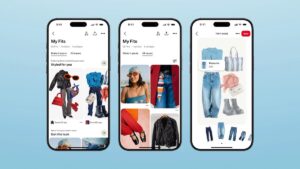
Pinterest is piloting new artificial‑intelligence features designed to make its boards more personalized and shopping‑friendly. The experiments include an AI‑driven “Styled for you” collage that helps users mix and match clothing and accessories, and “Boards made for you,” which curates personalized boards from editorial input and AI suggestions. Initially rolled out in the United States and Canada, the features aim to turn boards into an AI‑enabled shopping assistant while giving users control over AI‑generated content. Leia mais →

Pinterest Introduces Controls to Cut AI‑Generated Posts in Home Feed

Pinterest Introduces Controls to Cut AI‑Generated Posts in Home Feed
Pinterest has launched a new setting that lets users reduce the amount of AI‑generated content appearing in their home feed on Android and the web, with iOS support slated for later. Accessible through the Home Feed Tuner’s GenAI Interests tab, the toggle allows users to turn off AI posts in categories most prone to synthetic content. While the feature does not eliminate AI material entirely, Pinterest says it aims to strike a balance between human creativity and AI innovation, reflecting the company’s response to growing concerns over AI “slop” on the platform. Leia mais →

Channel 4 Unveils Britain’s First AI TV Presenter, Sparking Black Mirror Comparisons

Channel 4 Unveils Britain’s First AI TV Presenter, Sparking Black Mirror Comparisons
Channel 4 introduced Britain’s first AI‑generated TV presenter during the documentary *Will AI Take My Job? Dispatches*. The AI host revealed its synthetic nature in the closing moments, prompting viewers to liken the stunt to an episode of *Black Mirror*. Channel 4 emphasized that the experiment is not a new editorial practice and reaffirmed its commitment to fact‑checked, impartial journalism. The move has ignited debate about AI’s role in media, the ease of deceiving audiences, and the broader implications for talent and content creation in the entertainment industry. Leia mais →

YouTube Launches Likeness Detection Tool to Fight Deepfakes

YouTube Launches Likeness Detection Tool to Fight Deepfakes
YouTube is beginning to roll out a new likeness detection feature aimed at identifying and removing videos that alter a person’s facial appearance with artificial intelligence. The tool, initially available to members of the YouTube Partner Program, requires creators to submit a government ID and a short selfie for verification. It works similarly to Content ID by scanning uploads for facial matches, allowing individuals to flag infringing content for removal. The system currently focuses only on visual modifications and does not address AI‑altered voices. Leia mais →

Pinterest Adds Controls to Trim AI-Generated Posts in Home Feed

Pinterest Adds Controls to Trim AI-Generated Posts in Home Feed
Pinterest has introduced a new setting that lets users limit the amount of AI‑generated content appearing in their home feed. Available now on Android and the web, with an iOS rollout planned, the feature lives under a "GenAI Interests" tab in the home feed tuner. Users can toggle the switch off for specific categories that are prone to AI creation, reducing—but not eliminating—such posts. The move reflects Pinterest’s aim to balance human creativity with AI innovation, according to Chief Technology Officer Matt Madrigal. Leia mais →

Pinterest Introduces Controls to Reduce AI-Generated Content in User Feeds

Pinterest Introduces Controls to Reduce AI-Generated Content in User Feeds
Pinterest is rolling out new settings that let users dial down AI‑generated images in specific categories such as art, architecture, beauty and more. The "refine your recommendations" feature targets image pins, allowing people to limit AI content without removing it entirely. Labels for AI‑created material will become more prominent, and the tools are already live on desktop and Android, with iOS support arriving soon. The move aims to address user complaints about the platform’s susceptibility to AI "slop" while preserving quality content generated by humans. Leia mais →

OpenAI Rolls Out Sora AI Video App with Invite-Only Access

OpenAI Rolls Out Sora AI Video App with Invite-Only Access
OpenAI has launched Sora, a new social platform that streams AI‑generated videos, and is currently offering access by invitation only. Users must download the iOS app, sign in with a ChatGPT account, and request a notification for when access opens. The initial rollout targets the United States and Canada, giving priority to paying Pro subscribers. Once granted, each user receives four additional invite codes to share. OpenAI says the service will expand quickly to more regions. Leia mais →