What is new on Article Factory and latest in generative AI world

AI Upskilling Debate: Who Should Lead Employee Training?

AI Upskilling Debate: Who Should Lead Employee Training?
Emergn research reveals a split view on AI training responsibility. While 81% of employees expect employers to provide upskilling, 83% of CEOs believe workers should train themselves. The gap extends to senior leaders, with 64% of COOs and 59% of CTOs sharing the CEO stance. The lack of adequate training could deter two‑thirds of job seekers and risk delays in digital transformation, higher churn, and reduced productivity and wellbeing. Companies face a critical challenge in balancing expectations to stay competitive in the AI‑driven talent war. Leia mais →

Micro1 Claims $100M ARR as It Expands Into Enterprise AI Agents and Robotics Data

Micro1 Claims $100M ARR as It Expands Into Enterprise AI Agents and Robotics Data
Micro1, a fast‑growing AI‑data startup, announced that its annual recurring revenue has surpassed $100 million, up from roughly $7 million two years earlier. The company, which supplies human‑expert data to major AI labs and Fortune 100 firms, says the surge is driven by growing demand for evaluation and training data in large‑language‑model development. Micro1 is also targeting two emerging markets—enterprise AI agents and robotics pre‑training—where it plans to provide large‑scale human‑generated datasets. The firm recently closed a $35 million Series A round, valuing it at $500 million. Leia mais →

Google refutes claim that Gmail content is used to train Gemini AI, clarifies Smart Features

Google refutes claim that Gmail content is used to train Gemini AI, clarifies Smart Features
Google has dismissed viral reports that Gmail messages are being used to train its Gemini AI model, calling the claims misleading. A company spokesperson emphasized that Gmail’s Smart Features have existed for years and that the content is only used to personalize the user experience, not to train Gemini. Malwarebytes, the source of the original story, later corrected its article after reviewing Google’s documentation. The controversy coincided with a proposed California class‑action lawsuit alleging unauthorized use of Gmail data for Gemini, but Google maintains no such data usage occurred. Leia mais →

Japanese Publishers Demand OpenAI Halt Use of Their Works for AI Training

Japanese Publishers Demand OpenAI Halt Use of Their Works for AI Training
A Japanese trade group representing publishers such as Studio Ghibli has asked OpenAI to stop using its members' copyrighted material to train AI models without permission. The request follows growing concerns that OpenAI’s products, including its image and video generators, allow users to create content that imitates protected works. CODA argues that under Japanese law prior permission is required and that the current practice could constitute copyright infringement. The move adds to ongoing debates in the United States and elsewhere about how AI companies may use copyrighted material for training. Leia mais →

Apple Faces New Class Action Over Alleged Copyright Infringement in AI Training

Apple Faces New Class Action Over Alleged Copyright Infringement in AI Training
Apple is confronting a proposed class action lawsuit that alleges the company used copyrighted works without permission to train its artificial intelligence models. Two neuroscience professors from SUNY Downstate Health Sciences University claim Apple accessed their registered works through "shadow libraries" and web‑crawling tools. The filing follows a prior suit by a different pair of authors and comes amid a wave of similar actions against other tech firms, including OpenAI. The case highlights growing legal challenges surrounding AI training data and copyright law. Leia mais →

Anthropic Expands Claude Chat Data Use, Offers Opt-Out Option

Anthropic Expands Claude Chat Data Use, Offers Opt-Out Option
Anthropic announced that it will begin using user conversations and coding sessions from its Claude chatbot to train future large language models, unless users actively opt out. The policy change, detailed in an updated privacy notice, also extends data retention from thirty days to five years. New users encounter an opt‑in toggle during sign‑up, while existing users see a pop‑up prompting a choice. Users can manage the setting at any time under Privacy Settings by disabling the “Help improve Claude” switch. Commercial‑tier accounts remain exempt from the new training policy. Leia mais →

Neon App Pays Users for Call Recordings to Train AI

Neon App Pays Users for Call Recordings to Train AI
Neon, a free mobile app for iOS and Android, rewards users for recording their outgoing phone calls, offering up to $30 a day for regular calls and a per‑minute rate for calls to other Neon users. The recorded audio is anonymized and sold to AI developers to improve voice assistants. The app has surged in popularity on iOS, ranking among the top free apps, while the Android version has received mixed reviews. Privacy experts warn that the service may run afoul of state consent laws and raise security concerns despite the company’s anonymization promises. Leia mais →

Google Launches Data Commons MCP Server to Bring Real‑World Data to AI

Google Launches Data Commons MCP Server to Bring Real‑World Data to AI
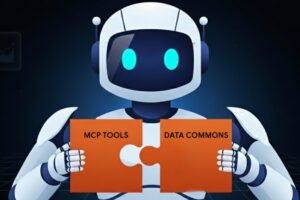
Google has introduced the Data Commons Model Context Protocol (MCP) Server, a new service that lets developers, data scientists and AI agents retrieve real‑world statistics through natural‑language queries. Built on the company’s Data Commons platform, which aggregates public datasets from government surveys, local administrations and international bodies, the MCP Server aims to provide high‑quality, structured data to improve AI training and reduce hallucinations. The launch follows the adoption of the MCP standard by firms such as OpenAI and Microsoft, and includes tools like the Agent Development Kit, Gemini CLI and a PyPI package for easy integration. A partnership with the ONE Campaign has produced the ONE Data Agent, demonstrating the server’s capability to surface millions of financial and health data points in plain language. Leia mais →

Synthetic Data’s Limits Highlight Need for Real-World Training in AI

Synthetic Data’s Limits Highlight Need for Real-World Training in AI
Synthetic data promises speed and scalability for AI development, especially when real data is scarce. However, industry experts warn that reliance on artificially generated datasets can create blind spots, particularly in complex, high‑pressure environments where unpredictable human behavior and subtle variations matter. Real‑world data, captured from sensors, field operations, and digital twins, offers a more accurate foundation, improving model reliability, regulatory compliance, and trust. The shift toward reality‑first training is seen as essential for AI systems that must adapt continuously to the nuances of actual operating conditions. Leia mais →

Tech Giants Commit to AI Education at White House Summit

Tech Giants Commit to AI Education at White House Summit
The White House convened leading technology CEOs for an AI education summit, where companies pledged substantial resources to prepare Americans for an AI-driven future. Google, Microsoft and Amazon announced major funding and training initiatives, while Meta, Apple and OpenAI were also on the invite list. The commitments include billions in grants, free software access for students, and large‑scale training programs aimed at educators and workers across the United States. Leia mais →

Synthetic Data’s Limits Highlight Need for Real-World Training in AI

Synthetic Data’s Limits Highlight Need for Real-World Training in AI
Synthetic data promises speed and scalability for AI development, especially when real data is scarce. However, industry experts warn that reliance on artificially generated datasets can create blind spots, particularly in complex, high‑pressure environments where unpredictable human behavior and subtle variations matter. Real‑world data, captured from sensors, field operations, and digital twins, offers a more accurate foundation, improving model reliability, regulatory compliance, and trust. The shift toward reality‑first training is seen as essential for AI systems that must adapt continuously to the nuances of actual operating conditions. Leia mais →

Synthetic Data’s Limits Highlight Need for Real-World Training in AI

Synthetic Data’s Limits Highlight Need for Real-World Training in AI
Synthetic data promises speed and scalability for AI development, especially when real data is scarce. However, industry experts warn that reliance on artificially generated datasets can create blind spots, particularly in complex, high‑pressure environments where unpredictable human behavior and subtle variations matter. Real‑world data, captured from sensors, field operations, and digital twins, offers a more accurate foundation, improving model reliability, regulatory compliance, and trust. The shift toward reality‑first training is seen as essential for AI systems that must adapt continuously to the nuances of actual operating conditions. Leia mais →

Tech Giants Commit to AI Education at White House Summit

Tech Giants Commit to AI Education at White House Summit
The White House convened leading technology CEOs for an AI education summit, where companies pledged substantial resources to prepare Americans for an AI-driven future. Google, Microsoft and Amazon announced major funding and training initiatives, while Meta, Apple and OpenAI were also on the invite list. The commitments include billions in grants, free software access for students, and large‑scale training programs aimed at educators and workers across the United States. Leia mais →

Tech Giants Commit to AI Education at White House Summit

Tech Giants Commit to AI Education at White House Summit
The White House convened leading technology CEOs for an AI education summit, where companies pledged substantial resources to prepare Americans for an AI-driven future. Google, Microsoft and Amazon announced major funding and training initiatives, while Meta, Apple and OpenAI were also on the invite list. The commitments include billions in grants, free software access for students, and large‑scale training programs aimed at educators and workers across the United States. Leia mais →

Synthetic Data’s Limits Highlight Need for Real-World Training in AI

Synthetic Data’s Limits Highlight Need for Real-World Training in AI
Synthetic data promises speed and scalability for AI development, especially when real data is scarce. However, industry experts warn that reliance on artificially generated datasets can create blind spots, particularly in complex, high‑pressure environments where unpredictable human behavior and subtle variations matter. Real‑world data, captured from sensors, field operations, and digital twins, offers a more accurate foundation, improving model reliability, regulatory compliance, and trust. The shift toward reality‑first training is seen as essential for AI systems that must adapt continuously to the nuances of actual operating conditions. Leia mais →

Tech Giants Commit to AI Education at White House Summit

Tech Giants Commit to AI Education at White House Summit
The White House convened leading technology CEOs for an AI education summit, where companies pledged substantial resources to prepare Americans for an AI-driven future. Google, Microsoft and Amazon announced major funding and training initiatives, while Meta, Apple and OpenAI were also on the invite list. The commitments include billions in grants, free software access for students, and large‑scale training programs aimed at educators and workers across the United States. Leia mais →

Tech Giants Commit to AI Education at White House Summit

Tech Giants Commit to AI Education at White House Summit
The White House convened leading technology CEOs for an AI education summit, where companies pledged substantial resources to prepare Americans for an AI-driven future. Google, Microsoft and Amazon announced major funding and training initiatives, while Meta, Apple and OpenAI were also on the invite list. The commitments include billions in grants, free software access for students, and large‑scale training programs aimed at educators and workers across the United States. Leia mais →

Synthetic Data’s Limits Highlight Need for Real-World Training in AI

Synthetic Data’s Limits Highlight Need for Real-World Training in AI
Synthetic data promises speed and scalability for AI development, especially when real data is scarce. However, industry experts warn that reliance on artificially generated datasets can create blind spots, particularly in complex, high‑pressure environments where unpredictable human behavior and subtle variations matter. Real‑world data, captured from sensors, field operations, and digital twins, offers a more accurate foundation, improving model reliability, regulatory compliance, and trust. The shift toward reality‑first training is seen as essential for AI systems that must adapt continuously to the nuances of actual operating conditions. Leia mais →

Anthropic Updates Claude Privacy Policy to Use User Chats for Training, Offers Opt-Out

Anthropic Updates Claude Privacy Policy to Use User Chats for Training, Offers Opt-Out
Anthropic announced changes to its Consumer Terms and Privacy Policy that will enable the company to use new and resumed Claude chat sessions for AI model training. The option is enabled by default for most Claude plans, but users can opt out during sign‑up or later via privacy settings. Certain enterprise, government, and education plans are excluded, and data from opted‑in users will be retained for up to five years. Anthropic says the extended retention helps identify misuse and improve safety. Users have until Sept. 28 to make a choice before continued access. Leia mais →

Anthropic Expands Data Use Policy for Claude Consumers

Anthropic Expands Data Use Policy for Claude Consumers
Anthropic announced that it will begin training its Claude AI models on new user chat and coding data unless users opt out, extending data retention to five years. The change affects all Claude consumer plans but excludes commercial tiers and third‑party API usage. Users must respond to a pop‑up notice by September 28, with the default setting turned on for data sharing. Anthropic says it filters sensitive information and does not sell user data. Leia mais →