What is new on Article Factory and latest in generative AI world

OpenAI and Booking.com Launch SME AI Accelerator for European Businesses

OpenAI and Booking.com Launch SME AI Accelerator for European Businesses
OpenAI has partnered with Booking.com to create the SME AI Accelerator, a program that will provide free, practical AI training to small and medium-sized businesses across six European countries. The initiative combines in‑person workshops, virtual sessions, and lessons from the OpenAI Academy to demonstrate how AI can boost productivity, efficiency, and competitiveness. Targeting 20,000 firms, the program aims to close the gap between AI adoption rates of large enterprises and SMEs, which currently stand at 55% versus 17% respectively. The effort forms part of a broader EU economic blueprint to strengthen the region’s AI ecosystem. Leia mais →

EU Launches Investigation into X Over AI-Generated Sexual Deepfakes

EU Launches Investigation into X Over AI-Generated Sexual Deepfakes
The European Commission has opened a formal inquiry into Elon Musk's X platform after concerns that its AI tool Grok may be facilitating the creation and spread of illegal sexual deepfake images, including child sexual abuse material. Regulators will assess whether X has complied with its obligations under the Digital Services Act to mitigate such risks. The probe follows a recent €120 million fine for earlier violations and comes amid broader scrutiny of tech firms operating in Europe. Leia mais →

EU Opens Formal Investigation into xAI's Grok Over Sexualized Deepfakes

EU Opens Formal Investigation into xAI's Grok Over Sexualized Deepfakes
The European Union has launched a formal investigation into xAI's Grok chatbot after concerns that the model generates sexualized deepfake images. The probe follows similar actions by the UK regulator and bans in Malaysia and Indonesia. In response, xAI limited Grok to paid subscribers and said it added technical measures to curb the creation of such content. Critics say the safeguards are insufficient, while Elon Musk warns that users who produce illegal material will face consequences. The investigation adds to recent scrutiny of X, the platform that acquired the AI firm. Leia mais →

EU Announces €307 Million AI Funding Call Focused on Trustworthy Technology

EU Announces €307 Million AI Funding Call Focused on Trustworthy Technology
The European Commission has launched a €307 million funding call under Horizon Europe to support research and development in artificial intelligence, data services, robotics, quantum technologies, and photonics. The program emphasizes trustworthy AI, ethical standards, and strategic autonomy, positioning Europe’s approach as values‑driven in contrast to the commercial speed of the United States. While the funding signals a strong policy commitment, officials acknowledge challenges in scaling infrastructure, talent, and market adoption needed to turn normative leadership into technological leadership. Leia mais →

Europe’s Regulatory Edge Fuels Legal AI Growth

Europe’s Regulatory Edge Fuels Legal AI Growth
European legal technology firms are turning the continent’s dense regulatory landscape into a competitive advantage. Heavy rules such as the GDPR and the AI Act are driving demand for AI tools that can navigate compliance, attracting substantial investment and shaping market maturity. Startups that embed privacy‑by‑design and compliance‑by‑design into their products are gaining trust and premium pricing, while generic large language models struggle to meet strict data‑security expectations. As Europe’s regulatory model gains global attention, legal AI built here is poised to become export‑ready and set the benchmark for the industry worldwide. Leia mais →

AI, Data Sovereignty and Metro-Edge Data Centers Reshape Europe’s Digital Landscape

AI, Data Sovereignty and Metro-Edge Data Centers Reshape Europe’s Digital Landscape
Artificial intelligence is fueling Europe’s digital ambitions, but organizations face a critical need for massive, low‑latency storage that complies with strict data‑sovereignty rules. New regulations such as the GDPR, Data Governance Act and AI Act push firms to keep data within specific jurisdictions, while modern AI workloads demand petabyte‑scale capacity and ultra‑fast access. To meet these twin pressures, Europe is seeing rapid growth in metro‑edge data centers—localized facilities near major population and industrial hubs—that combine high‑density storage, compliance, and proximity to compute resources. This shift toward local‑first, hybrid architectures promises to boost AI performance while satisfying regulatory requirements. Leia mais →

X limits Grok’s image‑generation tool to paying subscribers after global backlash

X limits Grok’s image‑generation tool to paying subscribers after global backlash
Elon Musk’s AI venture xAI has restricted access to Grok’s controversial image‑generation feature on X, making it available only to paying subscribers. The move follows a wave of criticism after the tool was used to create sexualized and non‑consensual images of women, children, and public figures. While the restriction applies to the X platform, the standalone Grok app remains free. Governments in the United Kingdom, the European Union, and India have publicly denounced the misuse and urged tighter controls, prompting X to tighten its policies. Leia mais →

EU Leverage Over AI: ASML Export Controls and Data Enforcement Threaten U.S. Tech and Politics

EU Leverage Over AI: ASML Export Controls and Data Enforcement Threaten U.S. Tech and Politics
Experts warn that the European Union could use its control of Dutch chip‑making equipment and stricter data‑privacy enforcement as a strategic lever against the United States. ASML’s monopoly on advanced lithography machines, vital for companies like Nvidia, gives Brussels the ability to restrict exports and influence the U.S. AI economy. Simultaneously, the EU’s push to enforce GDPR against firms such as Meta and Google could impede the data flows that power AI models. Analysts suggest that combined pressure on technology supply and data usage could destabilize the AI investment surge and create political challenges for President Trump. Leia mais →

U.S. Faces AI Regulation Debate, Echoing Early Internet History

U.S. Faces AI Regulation Debate, Echoing Early Internet History
The United States is confronting a growing clash over how to regulate artificial intelligence, drawing parallels to the hands‑off approach of the early Internet era. While some lawmakers pushed the Telecommunications Act of 1996 to give the FCC oversight, modern efforts focus on preventing an AI arms race with China and addressing concerns about bias, misinformation, and job security. The White House has issued an executive order to block state‑level AI rules, arguing that fragmented regulation would hinder national competitiveness. Meanwhile, the EU has moved faster on user‑data protections, highlighting divergent global strategies. Leia mais →

EU Opens Antitrust Investigation into Google's AI Search Features

EU Opens Antitrust Investigation into Google's AI Search Features
The European Commission has launched an antitrust probe into Google’s AI‑driven search tools, focusing on its AI Overviews and AI Mode. Regulators will examine whether Google uses website and YouTube content to generate AI answers without compensating publishers, and whether it imposes unfair terms that limit competitors’ access to that data. The investigation aims to assess potential harms to competition in the AI market and to determine if Google’s practices restrict rival AI firms from using the same content. Google has defended its approach, saying it will work with news and creative industries as AI evolves. Leia mais →

EU Scales Back GDPR and AI Rules Amid Industry Pressure

EU Scales Back GDPR and AI Rules Amid Industry Pressure
The European Union is proposing major revisions to its flagship privacy law, the GDPR, and to the AI Act. Under pressure from technology firms and the United States, Brussels plans to simplify cookie consent, ease restrictions on sharing anonymized data, and delay high‑risk AI regulations until supporting standards are in place. The changes aim to cut red tape, boost economic growth, and make compliance easier for smaller companies, while officials say fundamental user rights will remain protected. The proposal now moves to the European Parliament and member‑state governments, where it is expected to spark intense political debate. Leia mais →

Meta Expands Llama AI Access to European and Asian Governments

Meta Expands Llama AI Access to European and Asian Governments
Meta announced that its Llama suite of artificial‑intelligence models is now available to a broader set of governments, including France, Germany, Italy, Japan and South Korea, as well as organizations linked to the European Union and NATO. The rollout follows earlier deployments for the United States, the United Kingdom, Canada, Australia and New Zealand. Meta says governments can fine‑tune the models with their own sensitive data, host them in secure environments, and run them on‑device for specific national‑security use cases. The company highlights the open‑source nature of Llama as a key factor that lets officials download and deploy the technology without routing data through third‑party providers. Leia mais →

Chinese EV Buyers Slow, While Tesla Pushes Robots and BYD Grows in Europe

Chinese EV Buyers Slow, While Tesla Pushes Robots and BYD Grows in Europe
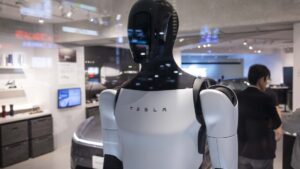
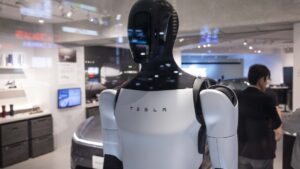
Chinese consumers are showing less enthusiasm for electric vehicles from Tesla and BYD, signaling a cooling market. BYD now accounts for a small share of new car sales in the European Union, while Tesla reported strong sales in Turkey, ranking as the country’s second‑most popular automaker. CEO Elon Musk continues to tout Tesla’s humanoid robot as a future revenue driver, claiming it could eventually generate the majority of the company’s value. The contrast between shifting buyer sentiment and ambitious robot plans highlights divergent challenges and opportunities for the two manufacturers. Leia mais →

Chinese EV Buyers Slow, While Tesla Pushes Robots and BYD Grows in Europe

Chinese EV Buyers Slow, While Tesla Pushes Robots and BYD Grows in Europe
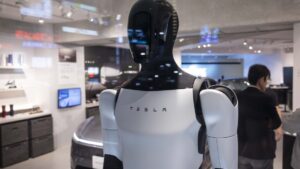
Chinese consumers are showing less enthusiasm for electric vehicles from Tesla and BYD, signaling a cooling market. BYD now accounts for a small share of new car sales in the European Union, while Tesla reported strong sales in Turkey, ranking as the country’s second‑most popular automaker. CEO Elon Musk continues to tout Tesla’s humanoid robot as a future revenue driver, claiming it could eventually generate the majority of the company’s value. The contrast between shifting buyer sentiment and ambitious robot plans highlights divergent challenges and opportunities for the two manufacturers. Leia mais →

Chinese EV Buyers Slow, While Tesla Pushes Robots and BYD Grows in Europe

Chinese EV Buyers Slow, While Tesla Pushes Robots and BYD Grows in Europe
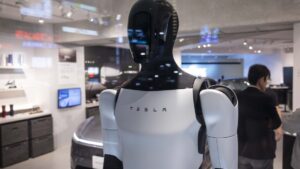
Chinese consumers are showing less enthusiasm for electric vehicles from Tesla and BYD, signaling a cooling market. BYD now accounts for a small share of new car sales in the European Union, while Tesla reported strong sales in Turkey, ranking as the country’s second‑most popular automaker. CEO Elon Musk continues to tout Tesla’s humanoid robot as a future revenue driver, claiming it could eventually generate the majority of the company’s value. The contrast between shifting buyer sentiment and ambitious robot plans highlights divergent challenges and opportunities for the two manufacturers. Leia mais →

Chinese EV Buyers Slow, While Tesla Pushes Robots and BYD Grows in Europe

Chinese EV Buyers Slow, While Tesla Pushes Robots and BYD Grows in Europe
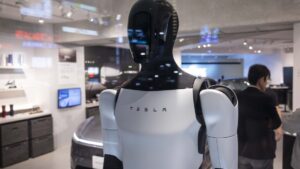
Chinese consumers are showing less enthusiasm for electric vehicles from Tesla and BYD, signaling a cooling market. BYD now accounts for a small share of new car sales in the European Union, while Tesla reported strong sales in Turkey, ranking as the country’s second‑most popular automaker. CEO Elon Musk continues to tout Tesla’s humanoid robot as a future revenue driver, claiming it could eventually generate the majority of the company’s value. The contrast between shifting buyer sentiment and ambitious robot plans highlights divergent challenges and opportunities for the two manufacturers. Leia mais →

Chinese EV Buyers Slow, While Tesla Pushes Robots and BYD Grows in Europe

Chinese EV Buyers Slow, While Tesla Pushes Robots and BYD Grows in Europe
Chinese consumers are showing less enthusiasm for electric vehicles from Tesla and BYD, signaling a cooling market. BYD now accounts for a small share of new car sales in the European Union, while Tesla reported strong sales in Turkey, ranking as the country’s second‑most popular automaker. CEO Elon Musk continues to tout Tesla’s humanoid robot as a future revenue driver, claiming it could eventually generate the majority of the company’s value. The contrast between shifting buyer sentiment and ambitious robot plans highlights divergent challenges and opportunities for the two manufacturers. Leia mais →

Europe’s AI Regulations Spark Debate Over Worker Protections and Innovation

Europe’s AI Regulations Spark Debate Over Worker Protections and Innovation
Europe’s approach to artificial intelligence, anchored by the GDPR and the new AI Act, contrasts sharply with the United States’ relatively hands‑off stance. The EU framework ties AI development to existing labour laws and union influence, prompting both optimism about safer, trust‑based AI and concern over potential job displacement. Executives and analysts note that while AI could streamline tasks and create higher‑value roles, the lack of explicit provisions for upskilling and displaced workers may fuel union pushback. The discussion centers on whether Europe can turn stringent regulation into a competitive advantage or risk stifling growth. Leia mais →