What is new on Article Factory and latest in generative AI world

Anthropic Unveils Opus 4.5 with Expanded Claude Tools and New Infinite Chat Feature

Anthropic Unveils Opus 4.5 with Expanded Claude Tools and New Infinite Chat Feature
Anthropic has launched Opus 4.5, the latest version of its flagship AI model, delivering stronger performance in coding, computer use, and office tasks. The update rolls out broader access to existing Claude tools—including the Claude for Chrome extension for all Max users—and introduces a new "infinite chat" capability that eliminates context‑window limits for paying customers. Claude for Excel is now generally available to Max, Team, and Enterprise users, offering native spreadsheet assistance with support for pivot tables, charts, and file uploads. Early internal tests show notable gains in accuracy and efficiency, while Anthropic touts Opus 4.5 as its safest model to date. Leia mais →

Anthropic Launches Claude Code Web App for Developers

Anthropic Launches Claude Code Web App for Developers
Anthropic has introduced a web‑based version of its AI coding assistant, Claude Code, extending the tool beyond its terminal interface. The new web app is rolling out to subscribers of Anthropic’s Pro and Max plans, letting users access Claude Code via the Claude website or iOS app. The move aims to let developers spin up AI coding agents wherever they work, positioning Anthropic against rivals such as GitHub Copilot, Cursor, Google and OpenAI. The product, which has seen rapid user growth and now generates significant revenue, continues to rely heavily on Anthropic’s own AI models, with most of its code written by the models themselves. Leia mais →

Anthropic Introduces ‘Skills’ Feature for Claude AI, Boosting Productivity

Anthropic Introduces ‘Skills’ Feature for Claude AI, Boosting Productivity
Anthropic has launched a new capability called Skills for Claude AI users across its Pro, Max, Team and Enterprise plans. Skills are pre‑configured folders that embed instructions, brand guidelines, legal clauses and other reference material directly into Claude projects, allowing the model to produce consistent, on‑brand output without repeated prompting. The feature is integrated throughout Claude’s ecosystem, including its apps, Claude Code, the Developer Platform and the Agent SDK. At the same time, Anthropic announced the Haiku 4.5 model, a faster and more efficient version of Claude that retains the coding strengths of the earlier Sonnet release. Leia mais →

Perplexity Makes Comet AI Browser Free, Adds Background Assistant for Max Users

Perplexity Makes Comet AI Browser Free, Adds Background Assistant for Max Users
Perplexity is opening its Comet AI‑powered web browser to everyone at no cost while introducing a new “background assistant” for subscribers of its Max plan. The free version retains the sidecar assistant that answers questions, summarizes pages, and helps with navigation. Max users gain access to higher‑performing AI models and a multitasking background assistant that can handle emails, shopping, and travel tasks from a central dashboard. The move positions Comet against established browsers like Google Chrome and newer AI‑focused options such as The Browser Company’s Dia, as the market anticipates OpenAI’s own AI browser launch. Leia mais →

Claude Gains Selective Memory Feature to Reference Past Conversations

Claude Gains Selective Memory Feature to Reference Past Conversations
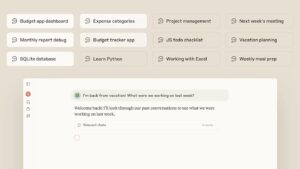
Anthropic has introduced a new capability for its Claude chatbot that lets users retrieve information from earlier chats when specifically prompted. The feature operates within the current workspace or project and does not automatically draw on past interactions, emphasizing a privacy‑focused approach. It is initially available to users on Anthropic's Max, Team, and Enterprise plans, with broader rollout planned. The move contrasts with OpenAI's ChatGPT, which stores all conversations for personalization, and Google's Gemini, which also recalls prior chats and can use search history. Anthropic positions Claude's memory as a controlled, opt‑in tool. Leia mais →