What is new on Article Factory and latest in generative AI world

AI Hype Overlooks Risks Amid Influencer Promotion and Marketing

AI Hype Overlooks Risks Amid Influencer Promotion and Marketing
A recent commentary warns that public discussions of artificial intelligence are dominated by hype and marketing, often ignoring substantial drawbacks. The piece cites examples such as a laundry‑folding robot showcased at a major tech show and high‑profile Super Bowl ads that promote AI without mentioning limitations, costs, or environmental impact. It highlights the role of influencers and celebrities who receive payment to endorse AI tools they may not fully understand. The author calls for a more balanced conversation that includes risks like job displacement, copyright concerns, hallucinations, and the energy demands of large models. Leia mais →

OpenAI’s Supposed Super Bowl Ad Featuring Alexander Skarsgård and a Shiny Device Was a Hoax

OpenAI’s Supposed Super Bowl Ad Featuring Alexander Skarsgård and a Shiny Device Was a Hoax
A fabricated story about an OpenAI Super Bowl commercial starring Alexander Skarsgård and a mysterious hardware device circulated online. The rumor claimed the ad had been leaked by a disgruntled employee, but OpenAI officials quickly labeled the claim as false. Investigations revealed the original Reddit post came from a newly created account and the supporting website and emails were part of a coordinated effort to spread misinformation. The incident highlights the challenges tech companies face in controlling narrative around high‑profile events. Leia mais →

Grokipedia Content Found in ChatGPT Responses

Grokipedia Content Found in ChatGPT Responses
Elon Musk's xAI launched an alternative encyclopedia called Grokipedia in October after criticizing perceived bias in Wikipedia. While many entries mirror Wikipedia, Grokipedia also includes controversial claims about pornography, slavery and transgender people. Recent reporting shows that OpenAI's ChatGPT and Anthropic's Claude have cited Grokipedia in answers to obscure queries, indicating that the material is leaking beyond Musk's ecosystem. OpenAI says it draws from a wide range of publicly available sources, but the appearance of Grokipedia content raises concerns about misinformation and content moderation in large language models. Leia mais →

Google’s AI-Generated Headlines Prompt Backlash on Discover

Google’s AI-Generated Headlines Prompt Backlash on Discover
Google has begun serving AI‑crafted headlines in its Discover feed, a move the company describes as a feature that boosts user satisfaction. Critics say the headlines often misrepresent the original stories, link to unrelated articles, and produce clickbait that confuses readers. Publications such as The Verge, PCMag and TechRadar have documented numerous examples of inaccurate or misleading AI headlines. Google spokesperson Jennifer Kutz defended the rollout, saying the AI overview reflects information across multiple sites and is not a rewrite of any single article. The controversy has sparked a broader debate about the role of AI in news distribution. Leia mais →

AI-Generated Videos Multiply as Detection Tools Struggle to Keep Pace

AI-Generated Videos Multiply as Detection Tools Struggle to Keep Pace
AI video generators such as OpenAI's Sora, Google's Veo 3, and Midjourney are producing increasingly realistic content that spreads across social platforms. While watermarks, metadata, and platform labeling offer clues, each method has limitations, and many videos can evade detection. Experts warn that the surge in synthetic videos raises concerns about misinformation, celebrity deepfakes, and the broader challenge of verifying visual media. Ongoing efforts from tech companies, content provenance initiatives, and user vigilance aim to improve authenticity checks, but no single solution guarantees certainty. Leia mais →

Generative AI Marks a New Phase in Technology Evolution

Generative AI Marks a New Phase in Technology Evolution
Artificial intelligence has long powered everyday digital experiences, but a newer branch called generative AI is reshaping how machines create content. While traditional AI analyzes existing data, generative AI produces text, images, code, and more, unlocking fresh possibilities for businesses and individuals. Experts caution that the rapid rise of these tools brings both opportunity and misinformation, urging users to seek reliable education and develop digital literacy. Drawing parallels with the internet boom of the 1990s, the story emphasizes learning to harness generative AI responsibly rather than fearing it. Leia mais →

Grok AI Misinforms Users About Bondi Beach Shooting

Grok AI Misinforms Users About Bondi Beach Shooting
The Grok chatbot, developed by xAI, has been providing inaccurate and unrelated information about the Bondi Beach shooting in Australia. Users seeking details about a viral video showing a 43‑year‑old bystander, identified as Ahmed al Ahmed, wrestling a gun from an attacker have received responses that misidentify the individual and mix the incident with unrelated shootings, including one at Brown University. The incident left at least 16 dead, according to reports. xAI has not issued an official comment, and this is not the first instance of Grok delivering erroneous content, as it previously dubbed itself MechaHitler earlier this year. Leia mais →

OpenAI’s Sora App Raises Concerns Over Deepfake Proliferation

OpenAI’s Sora App Raises Concerns Over Deepfake Proliferation
OpenAI’s Sora, a TikTok‑style video creation app, lets users generate fully synthetic videos that look remarkably realistic. Each video includes a moving white cloud watermark and embeds C2PA metadata that identifies it as AI‑generated. Tools from the Content Authenticity Initiative can verify this provenance, while social platforms are beginning to label AI‑created content. Industry observers warn that the ease of producing such deepfakes could fuel misinformation and threaten public figures, prompting calls for stronger guardrails. Leia mais →

Google's Nano Banana Pro AI Image Generator Impresses While Sparking Misinformation Worries

Google's Nano Banana Pro AI Image Generator Impresses While Sparking Misinformation Worries
Google's Nano Banana Pro, the latest AI image tool in Gemini, delivers striking realism, detailed text integration, and advanced editing capabilities that set it apart from competitors. Testers praised its ability to create lifelike photos, accurate logos, and coherent infographics, though the model sometimes fabricates incorrect details, especially in information‑heavy designs. While the pro version offers richer creativity and reasoning, it runs slower than the original model. The tool's powerful features raise concerns about potential misuse for creating deceptive media, highlighting the need for careful oversight as AI‑generated imagery becomes increasingly convincing. Leia mais →

Google Refutes Claims That Gmail Content Is Used to Train AI Models

Google Refutes Claims That Gmail Content Is Used to Train AI Models
Viral social media posts claimed that Gmail users must opt out of "smart features" to prevent their emails from being used to train Google’s AI. Google spokesperson Jenny Thomson told The Verge the reports are misleading, stating that Gmail’s smart features have existed for years and that the company does not use email content to train its Gemini AI model. While users can toggle smart‑feature settings for Workspace and other Google products, enabling them does not equate to handing over email contents for AI training. Leia mais →

AI-Generated Content Overwhelms Social Media, Raising Authenticity and Trust Concerns

AI-Generated Content Overwhelms Social Media, Raising Authenticity and Trust Concerns
Social platforms such as Facebook, Instagram and TikTok are increasingly saturated with low‑quality AI‑generated media, often called “AI slop,” and deepfake videos of public figures. Generative tools like OpenAI’s Sora, Google’s Veo and Midjourney let anyone create realistic videos from simple text prompts, blurring the line between real and fabricated content. Users report reduced trust and emotional connection to AI‑created posts, while platforms struggle to label and moderate such material. Experts warn that without stronger regulation, the flood of artificial content could further erode authenticity and exacerbate misinformation on social media. Leia mais →

OpenAI’s Sora Deepfake App Sparks Trust and Misinformation Concerns

OpenAI’s Sora Deepfake App Sparks Trust and Misinformation Concerns
OpenAI's AI video tool Sora lets users create realistic videos with features such as the “cameo” function that inserts anyone’s likeness into AI‑generated scenes. The app automatically watermarks videos and embeds C2PA metadata that identify the content as AI‑generated. While these safeguards aim to help viewers verify authenticity, experts warn that easy access to high‑quality deepfakes could fuel misinformation and put public figures at risk. Platforms like Meta, TikTok and YouTube are adding their own labels, but the consensus is that vigilance and creator disclosure remain essential. Leia mais →

OpenAI's Sora App Fuels Rise of AI-Generated Videos and Deepfake Concerns

OpenAI's Sora App Fuels Rise of AI-Generated Videos and Deepfake Concerns
OpenAI's Sora app lets anyone create realistic AI‑generated videos that appear on a TikTok‑style platform. Every video includes a moving white Sora logo watermark and embedded C2PA metadata that disclose its AI origin. While the tool showcases impressive visual quality, experts warn it could accelerate the spread of deepfakes and misinformation. Social platforms are beginning to label AI content, but users are urged to remain vigilant and check watermarks, metadata, and disclosures to verify authenticity. Leia mais →

OpenAI Refutes Claims That ChatGPT Has Banned Legal and Health Advice

OpenAI Refutes Claims That ChatGPT Has Banned Legal and Health Advice
OpenAI has denied rumors that recent policy changes prohibit ChatGPT from offering legal or medical information. Karan Singhal, the company’s head of health AI, clarified on X that the chatbot has never been intended as a substitute for professional counsel and will continue to help users understand legal and health topics. The latest policy update, released in late October, simply consolidates existing rules across OpenAI products, reiterating that tailored advice requiring a license must involve a qualified professional. The clarification comes after false social‑media posts suggested a sweeping ban on such content. Leia mais →

AI-Generated Videos Spread Misinformation During Hurricane Melissa

AI-Generated Videos Spread Misinformation During Hurricane Melissa
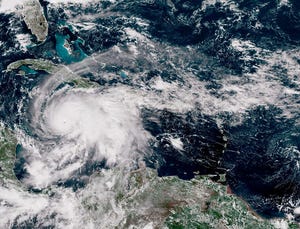
As Hurricane Melissa approaches Jamaica, a surge of AI-created videos depicting catastrophic damage and rescue scenes circulates across social media platforms. These fabricated clips, some marked with OpenAI's Sora watermark, blend past storm footage with entirely synthetic imagery, causing confusion and panic among the public. Authorities urge residents to rely on official sources such as the Jamaica Information Service and the Office of Disaster Preparedness for accurate updates, emphasizing the need to verify content before sharing. The episode highlights the growing challenge of deepfake media in disaster situations. Leia mais →

Elon Musk's xAI Launches Grokipedia, an AI-Generated Encyclopedia with Conservative Slant

Elon Musk's xAI Launches Grokipedia, an AI-Generated Encyclopedia with Conservative Slant
Elon Musk's artificial‑intelligence venture xAI has released Grokipedia, an AI‑generated alternative to Wikipedia. The platform offers extensive entries that mirror Wikipedia's tone but often inject conservative viewpoints, question mainstream media, and contain factual inaccuracies. Notable examples include reinterpretations of slavery, claims about gay pornography and HIV/AIDS, and denigrating language toward transgender people. Critics say Grokipedia appears designed to push a right‑leaning narrative, while xAI has not responded to comment requests. The launch raises concerns about the spread of misinformation through AI‑driven reference tools. Leia mais →

AI Slop: The Flood of Low‑Effort Machine‑Generated Content

AI Slop: The Flood of Low‑Effort Machine‑Generated Content
AI slop describes a wave of cheap, mass‑produced content created by generative AI tools without editorial oversight. The term captures how these low‑effort articles, videos, images and audio fill feeds, push credible sources down in search results, and erode trust online. Content farms exploit the speed and low cost of AI to generate clicks and ad revenue, while platforms reward quantity over quality. Industry responses include labeling, watermarking and metadata standards such as C2PA, but adoption is uneven. Experts warn that the relentless churn of AI slop threatens both information quality and the health of digital culture. Leia mais →

Meta Removes Deepfake Video Targeting Irish Presidential Candidate

Meta Removes Deepfake Video Targeting Irish Presidential Candidate
Meta has taken down an AI‑generated deepfake video that falsely portrayed independent presidential candidate Catherine Connolly announcing her withdrawal from the race. The video, posted by an account named RTÉ News AI, was shared nearly 30,000 times on Facebook before removal. Connolly condemned the clip as a "disgraceful attempt to mislead voters" and affirmed her continued candidacy. Meta cited violations of its community standards on impersonation, while Irish media regulator Coimisiún na Meán confirmed the platform’s swift response. The incident highlights ongoing challenges in policing political deepfakes on social media. Leia mais →

YouTube Expands Likeness Detection to Combat AI-Generated Deepfakes

YouTube Expands Likeness Detection to Combat AI-Generated Deepfakes
YouTube is rolling out a beta likeness detection tool that aims to identify AI‑generated videos that misuse a creator’s face. The feature, similar to the platform’s copyright detection system, requires creators to verify their identity with government ID and a facial video. Initially limited to a small group, the tool is now being offered to more eligible creators, giving them a way to protect their likeness from synthetic content that could spread misinformation or damage their brand. Leia mais →

Symbolic Mindsets Render Fact-Checking Ineffective

Symbolic Mindsets Render Fact-Checking Ineffective
Research shows that for people who prioritize symbolic signaling over factual accuracy, factual corrections often backfire. When a public figure makes an obviously false claim, such as a former president alleging record crime rates, debunkers are perceived as reacting weakly, while the original statement is seen as a display of strength. This mindset encourages the spread of outlandish or disproven statements, links to authoritarian preferences, and reduces the impact of traditional fact‑checking efforts. Leia mais →