What is new on Article Factory and latest in generative AI world

Anthropic Expands Claude’s Advanced Features to Free Users

Anthropic Expands Claude’s Advanced Features to Free Users
Anthropic has upgraded its Claude AI chatbot by making its most powerful tools—file creation, Connectors, and customizable Skills—available to anyone on the free tier. The enhancements also include longer conversation capacity, improved voice and image search, and richer interactive displays. By removing previous barriers, the company positions Claude as a utility for everyday productivity, allowing users to generate documents, interact directly with calendars and email, and tailor the assistant’s behavior without a paid subscription. Leia mais →

Snowflake and OpenAI Announce $200 Million Enterprise AI Partnership

Snowflake and OpenAI Announce $200 Million Enterprise AI Partnership
Snowflake and OpenAI have sealed a multi‑year partnership valued at $200 million that embeds OpenAI’s advanced models, including GPT‑5.2, directly into Snowflake’s data platform. The integration enables Snowflake’s over 12,000 customers to build AI agents, run semantic analytics, and create applications that operate on their own data without leaving Snowflake’s governed environment. By weaving generative AI into Snowflake Cortex AI and Snowflake Intelligence, the deal aims to simplify enterprise AI adoption, boost productivity, and keep data secure, while signaling a broader shift toward platform‑level AI capabilities in the cloud market. Leia mais →

Google Introduces Gemini-Powered Meeting Scheduling Feature in Calendar

Google Introduces Gemini-Powered Meeting Scheduling Feature in Calendar
Google is rolling out a new Gemini feature for Google Calendar that suggests optimal meeting times based on attendees' availability. When creating an event, users can select "Suggested times" and Gemini will scan calendar data to propose slots that work for most participants. If invitees decline, the tool can quickly recommend an alternative time. The feature is currently limited to paid Google Workspace Business and Enterprise plans, as well as Google AI Pro for Education users, and is being released to Rapid Release domains before expanding to Scheduled Release domains. Leia mais →

Anthropic Expands Claude with In‑Chat App Integrations via MCP

Anthropic Expands Claude with In‑Chat App Integrations via MCP
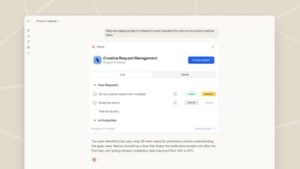
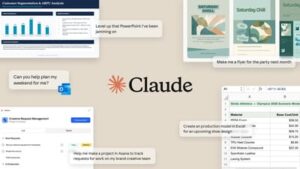
Anthropic has added a new extension to its Claude chatbot that lets users interact with popular productivity apps—such as Slack, Canva, Asana, and Figma—directly inside the chat interface. Powered by the open‑source Model Context Protocol (MCP), the integration moves beyond simple text replies, offering visual, interactive experiences that let users draft messages, build presentations, and manage projects without leaving the AI conversation. The move signals a shift toward AI platforms functioning more like operating systems, and the MCP framework is being positioned for broader adoption across other AI products. Leia mais →

Anthropic Expands Claude with Deep Integrations for Canva, Slack, and More

Anthropic Expands Claude with Deep Integrations for Canva, Slack, and More
Anthropic has broadened Claude's capabilities by adding native integrations with a range of third‑party applications, including Canva, Slack, Box, Asana, and Figma. The new connections let users fetch files, preview documents, and transform chat discussions into actionable tasks directly within those platforms. Powered by the Model Context Protocol (MCP), which Anthropic released in fall 2024 and later donated to the Linux Foundation, the integrations have already been adopted by nine launch partners and are also being used by OpenAI. Leia mais →

Google Gemini Introduces Personal Intelligence Feature for Deeper Context

Google Gemini Introduces Personal Intelligence Feature for Deeper Context
Google has added a new Personal Intelligence capability to Gemini that can draw context from a user’s Gmail, Photos, Search history and YouTube activity. The feature is optional, off by default, and lets users decide which apps feed data into the model. Gemini will not train directly on that personal content, instead learning from prompts and responses. The functionality is currently available for Google AI Pro and Ultra subscribers on the Gemini app across web, Android and iOS, with plans to expand to Search’s AI Mode and additional regions. Google also highlighted ongoing integrations, including a partnership that will power Siri with Gemini. Leia mais →

AI‑Powered Browsers Spark New Governance Challenges

AI‑Powered Browsers Spark New Governance Challenges
AI‑first browsers embed generative tools such as summarization, rewriting and real‑time suggestions directly into the web‑page experience. While they boost productivity, they also blur the line between approved enterprise software and shadow AI, making it harder for organizations to see when employees invoke AI and what data is processed. This hidden usage creates version drift, skips formal review steps, and shifts interpretation away from source documents, leading to gaps in audit trails, retention, compliance and operational consistency. Experts recommend new controls to keep AI‑generated content traceable and governed within existing workflows. Leia mais →

OpenAI Acquires Health Records Startup Torch

OpenAI Acquires Health Records Startup Torch
OpenAI announced the acquisition of Torch, a small health‑tech startup, for equity valued at $100 million. Torch’s four‑person team, which built a platform described as a "medical memory for AI," will join OpenAI as it expands its new ChatGPT Health service. The technology aims to unify scattered medical data—from doctor visits to wearable devices—into a single context engine for artificial‑intelligence analysis, positioning OpenAI to offer more comprehensive health‑focused AI tools. Leia mais →

Apple Partners with Google to Use Gemini for AI Features Including Siri

Apple Partners with Google to Use Gemini for AI Features Including Siri
Apple has announced a partnership with Google to power its upcoming AI features, including an upgraded Siri, using Google’s Gemini models and cloud infrastructure. The multi‑year deal follows Apple’s evaluation of several AI providers and aligns with its focus on privacy and on‑device processing. While the agreement is not exclusive, it marks a shift for Apple, which has traditionally built its own hardware‑software stack. The collaboration is expected to enable new experiences across Apple’s ecosystem while maintaining the company’s privacy standards. Leia mais →

Apple Picks Google Gemini to Power Next-Generation Siri

Apple Picks Google Gemini to Power Next-Generation Siri
Apple announced that its upcoming, more intelligent version of Siri will be powered by Google’s Gemini large‑language models. The partnership, described as multi‑year, lets Apple run Gemini on its Private Cloud Compute infrastructure, keeping user data isolated from Google’s servers. Apple highlighted the decision after an extensive evaluation, noting Gemini provides the most capable foundation for its future foundation models. Bloomberg reported that Apple may pay roughly $1 billion a year for the access and that Apple still aims to eventually replace third‑party models with its own in‑house technology. Leia mais →

Industrial AI Gains Traction as Companies Prioritize Real-World Impact

Industrial AI Gains Traction as Companies Prioritize Real-World Impact
Industrial AI is moving beyond hype to deliver tangible benefits across manufacturing, energy, utilities, and logistics. By connecting machines, sensors, and systems, AI helps predict failures, automate scheduling, and improve safety. Companies are reshaping workforces, elevating human experts while AI handles diagnostics and routine tasks. Success now hinges on change management, trust building, and embedding AI into core workflows rather than adding it as an afterthought. This shift supports new business models like servitization and advances sustainability goals, positioning industrial AI as a practical driver of efficiency and long‑term value. Leia mais →
Apple Music Joins ChatGPT as a Built‑In Playlist Assistant

Apple Music Joins ChatGPT as a Built‑In Playlist Assistant
Apple Music is now available as a third‑party app inside ChatGPT, letting users create playlists, locate songs and albums, and listen to short clips directly through the AI chat. Subscribers can link their Apple Music accounts to save playlists straight to their libraries. The integration works alongside existing features like the plus sign or “@Apple Music” command and benefits from ChatGPT’s contextual awareness, allowing music requests to be made mid‑conversation. A comparison with Spotify’s similar ChatGPT app highlights differences in personalization and prompt‑driven playlist generation. Leia mais →

OpenAI Launches ChatGPT App Store Featuring Major Digital Tools

OpenAI Launches ChatGPT App Store Featuring Major Digital Tools
OpenAI has introduced an app platform within ChatGPT, allowing users to access popular digital services such as Adobe Photoshop, Spotify, Canva, and Zillow directly through the chatbot. The storefront categorizes apps into Featured, Lifestyle, and Productivity sections, and users connect apps via a simple "Connect" button that enables @‑prompt interactions. While the desktop version shows the new apps, the mobile iOS version has not yet received them. The rollout follows OpenAI's Dec. 17 announcement that developers could submit apps, and comes amid a lawsuit from Ziff Davis alleging copyright infringement. Leia mais →

Google Maps Gets Conversational AI Boost with Gemini Integration

Google Maps Gets Conversational AI Boost with Gemini Integration
Google has woven its Gemini AI directly into Maps, replacing the old Assistant button with a new Gemini button. Users can ask the app for coffee shops, scenic lunch spots, traffic updates and alternative routes, all in conversational language. The AI draws on Maps’ business listings, reviews, images and real‑time traffic data to provide context‑aware suggestions that adapt as you move. While the system occasionally adds a few seconds of latency, it delivers more nuanced, multi‑criteria recommendations than traditional map searches, making navigation feel more natural and proactive. Leia mais →

OpenAI Hires Slack CEO as New Chief Revenue Officer

OpenAI Hires Slack CEO as New Chief Revenue Officer
OpenAI has appointed former Slack chief executive Denise Dresser as its chief revenue officer. Dresser, who led Slack for two years after a series of senior roles at Salesforce, will report to COO Brad Lightcap and oversee enterprise affairs and global revenue strategy beginning in December 2025. OpenAI highlighted her experience scaling large‑business platforms and integrating AI, noting the move comes as the company expands its enterprise customer base, now estimated at one million businesses, and seeks to boost profitability amid a recent for‑profit restructuring. Leia mais →

AI Companies Embrace Model Context Protocol as Emerging Industry Standard

AI Companies Embrace Model Context Protocol as Emerging Industry Standard
Leading artificial‑intelligence firms including Anthropic, OpenAI, Google, Microsoft, and Block are co‑operating around the Model Context Protocol (MCP), a framework that lets AI agents access external tools and data in a uniform way. Anthropic has donated MCP to the Linux Foundation, positioning it as an open‑source standard overseen by a neutral body. The collaboration aims to simplify integration, improve agent performance, and address security concerns, while laying groundwork for a marketplace of AI‑compatible services. Leia mais →

Anthropic Expands Claude Code Access to Slack Users

Anthropic Expands Claude Code Access to Slack Users
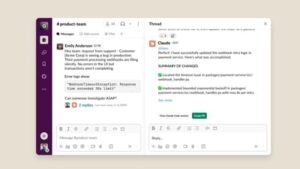
Anthropic has launched a new feature that lets Slack users invoke Claude Code directly from their chats. By tagging Claude on a coding‑related message, the system automatically detects the task, pulls context from the thread, and routes the request to Claude Code, which can interact with authenticated code repositories. The functionality is available as a research preview within the existing Claude app for Slack, requiring no additional downloads. The rollout follows Anthropic’s recent release of the Claude Opus 4.5 model, which the company touts as a strong performer in coding tasks compared with competing AI systems. Leia mais →

Anthropic Unveils Claude Code Integration for Slack, Elevating AI-Powered Development

Anthropic Unveils Claude Code Integration for Slack, Elevating AI-Powered Development
Anthropic has introduced Claude Code as a beta feature within Slack, allowing developers to initiate full coding sessions directly from chat threads. The integration expands on existing Slack capabilities by automatically selecting repositories, posting progress updates, and linking to pull requests without leaving the conversation. This move underscores a broader industry shift toward embedding AI coding assistants in collaboration platforms rather than traditional IDEs. While competitors like Cursor, GitHub Copilot, and OpenAI Codex are also exploring similar integrations, Anthropic’s rollout highlights the strategic importance of workflow‑centric AI tools. Security and dependency concerns accompany the new functionality, prompting teams to consider access controls and platform reliability. Leia mais →

Microsoft Pushes AI Integration into Windows Amid User Backlash

Microsoft Pushes AI Integration into Windows Amid User Backlash
Microsoft is embedding AI capabilities such as Copilot, Vision, and Voice directly into Windows, aiming to create an "agentic" operating system. The rollout has sparked criticism from users who report reliability issues and a loss of control, prompting concerns about forced adoption and privacy. Microsoft officials acknowledge the need for choice and have begun adding safeguards, but the push continues as the company expands AI features across its suite of products and infrastructure. Leia mais →

Critics Question Microsoft’s AI Security Warning

Critics Question Microsoft’s AI Security Warning
Microsoft warned that its new AI feature could infect computers and steal data, but experts say the safeguard relies on users clicking through permission prompts. Scholars and critics argue that habituated users may ignore warnings, making the protection ineffective. The debate highlights past "ClickFix" attacks, accusations that the warning is a legal CYA move, and broader concerns about AI integrations from major tech firms becoming default despite security risks. Leia mais →