What is new on Article Factory and latest in generative AI world

Google, Amazon, and xAI Pursue Space‑Based Artificial Intelligence

Google, Amazon, and xAI Pursue Space‑Based Artificial Intelligence
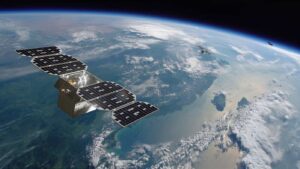
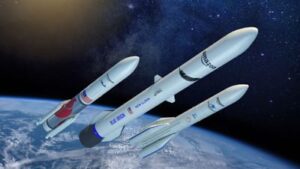
Google, Amazon, and Elon Musk's xAI are each advancing projects to place artificial intelligence capabilities in low‑Earth orbit. Google’s Project Suncatcher aims to power orbital compute nodes with solar energy, Amazon’s Leo seeks to integrate AI with its satellite internet constellation, and xAI is exploring orbital training farms. Proponents argue space‑based AI could lower latency, ease terrestrial power constraints, and broaden connectivity for remote users. However, challenges such as launch costs, radiation shielding, and orbital traffic remain significant hurdles as the tech giants move from concept to implementation. Leia mais →
Google Explores Satellite Data Centers for AI with Project Suncatcher

Google Explores Satellite Data Centers for AI with Project Suncatcher
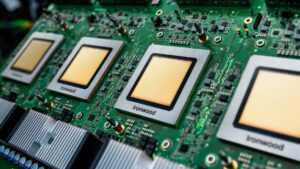
Google is researching the concept of placing AI hardware in low‑earth orbit through a project called Suncatcher. The plan envisions solar‑powered satellites carrying Tensor Processing Units (TPUs) to run machine‑learning models using continuous, clean energy. While the idea promises higher power efficiency and reduced carbon emissions, Google acknowledges significant technical hurdles such as radiation exposure, high‑speed inter‑satellite data links, and precise formation flying. Economic analysis suggests comparable power efficiency to Earth‑based data centers by the mid‑2030s, and the company aims to launch prototype satellites by 2027 to test the concept. Leia mais →

Google Unveils Project Suncatcher to Deploy AI Chips on Low‑Earth‑Orbit Satellites

Google Unveils Project Suncatcher to Deploy AI Chips on Low‑Earth‑Orbit Satellites
Google announced Project Suncatcher, a moonshot initiative to explore placing its Tensor Processing Units (TPUs) on solar‑powered satellite constellations in low‑Earth orbit. The goal is to scale machine‑learning compute in space by creating swarms of satellites equipped with AI accelerators for tasks such as training, content generation, synthetic speech, vision, and predictive modeling. Google’s senior director Travis Beals highlighted growing AI demand as a driver, while CEO Sundar Pichai noted early tests show TPUs can survive intense radiation, though thermal management and on‑orbit reliability remain challenges. Leia mais →

Google's 'Moonshot' Project Suncatcher Aims to Build Space‑Based AI Data Centers

Google's 'Moonshot' Project Suncatcher Aims to Build Space‑Based AI Data Centers
Google has unveiled Project Suncatcher, a research effort to place AI‑focused Tensor Processing Units on solar‑powered satellites, creating data centers in orbit. The company argues that space could offer near‑continuous solar energy, potentially making compute more sustainable. Key hurdles include ultra‑high‑speed inter‑satellite links, tight formation flying, radiation tolerance, and cost competitiveness. Google plans a joint launch with Planet to test prototype hardware by 2027, hoping the approach could become comparable to Earth‑based energy costs by the mid‑2030s. Leia mais →

Google's Project Suncatcher Aims to Deploy AI Data Centers in Space

Google's Project Suncatcher Aims to Deploy AI Data Centers in Space
Google is developing Project Suncatcher, a plan to place AI‑focused data centers on a free‑fall satellite constellation. The design calls for tightly spaced satellites—within a kilometer or even several hundred meters—to maintain power links, a formation tighter than any existing constellation but deemed feasible by Google’s models. To keep costs down, Google intends to reuse Earth‑based hardware, testing its durability by exposing its latest Cloud TPU to intense radiation. Prototype satellites could launch by early 2027, with broader deployment targeted for the mid‑2030s when launch costs may fall dramatically, offering a potential solution to the environmental and community challenges of terrestrial data centers. Leia mais →